

In numbers
14days
approximate length of the red deer rut in the Krkonoše mountains
600animals
estimated number of red deer on the Czech side of the Krkonoše, according to Správa KRNAP in 2020
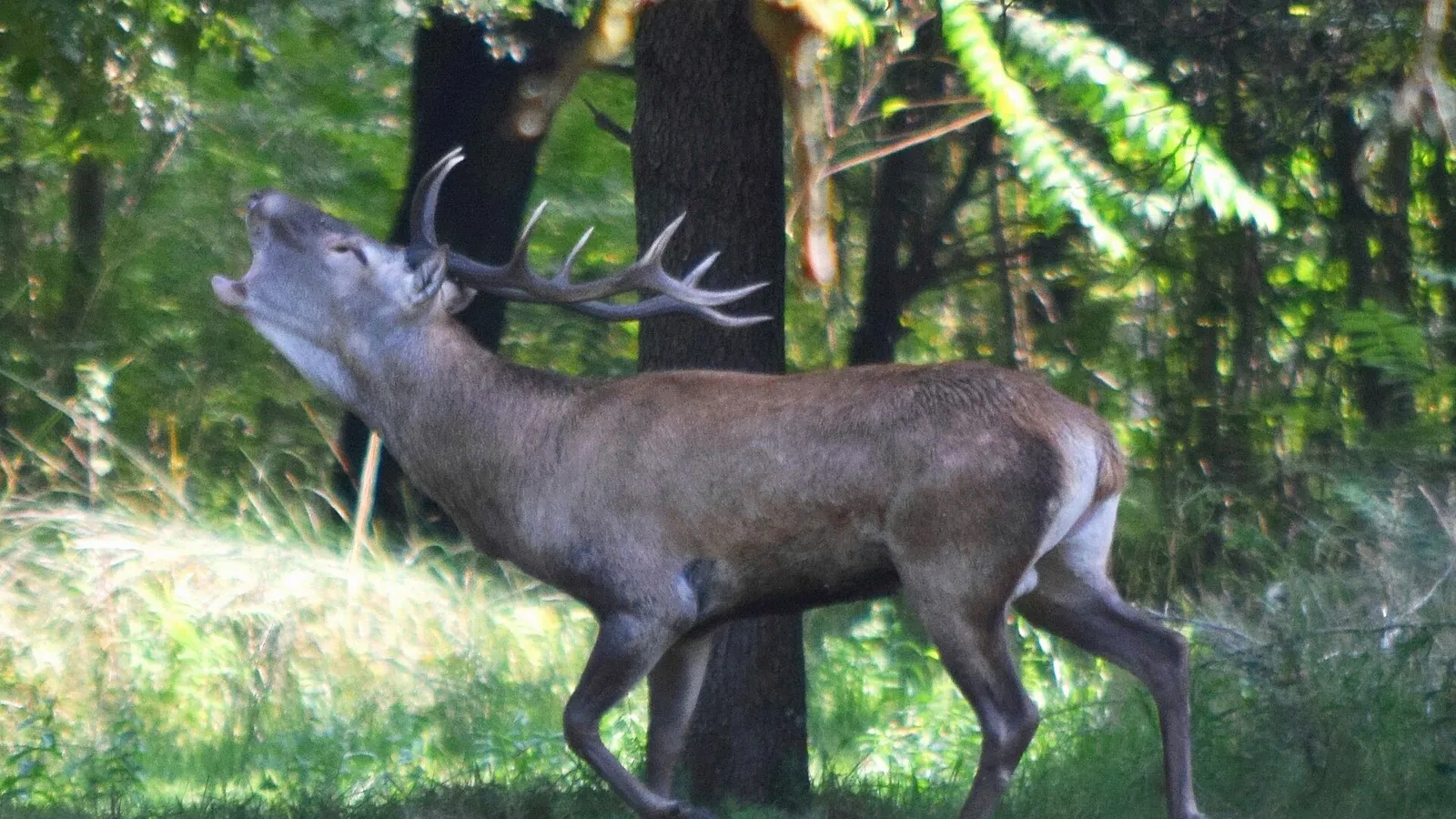
Rustling leaves are not the only sound in the autumn forest. A stag guarding hinds for weeks roars into the morning mist, all the while barely eating. Being king of the forest comes at a high price.
01The rut
One deep voice decides the king of the forest
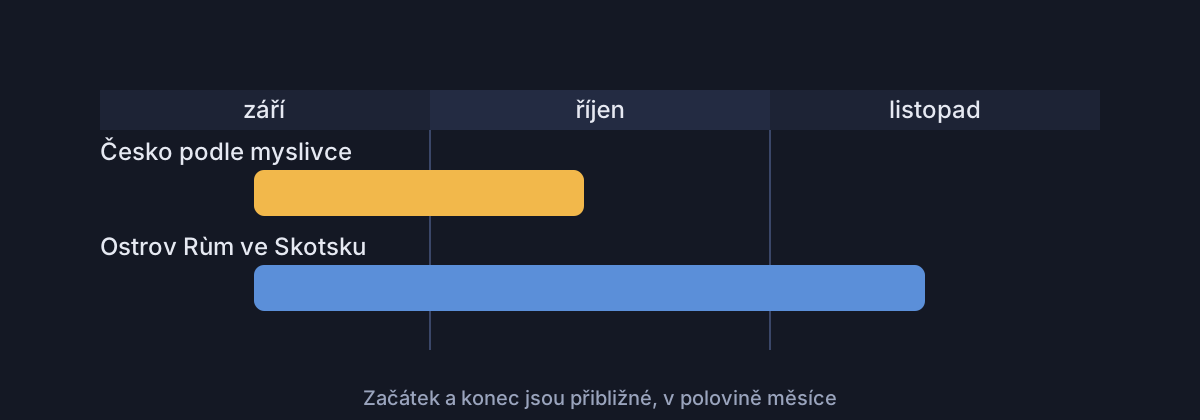
The rut is the red deer's mating season. Males compete for a group of hinds, known in the literature as a harem, and guard it against other males. According to an experienced gamekeeper, the red deer rut begins around mid-September and ends around mid-October.
The precise timing depends on altitude, the weather and, above all, when the hinds are ready to mate. The oldest males enter the rut first, with younger ones joining later. The first roars are known as the 'searching stag' call, used mainly to gather hinds into a group.
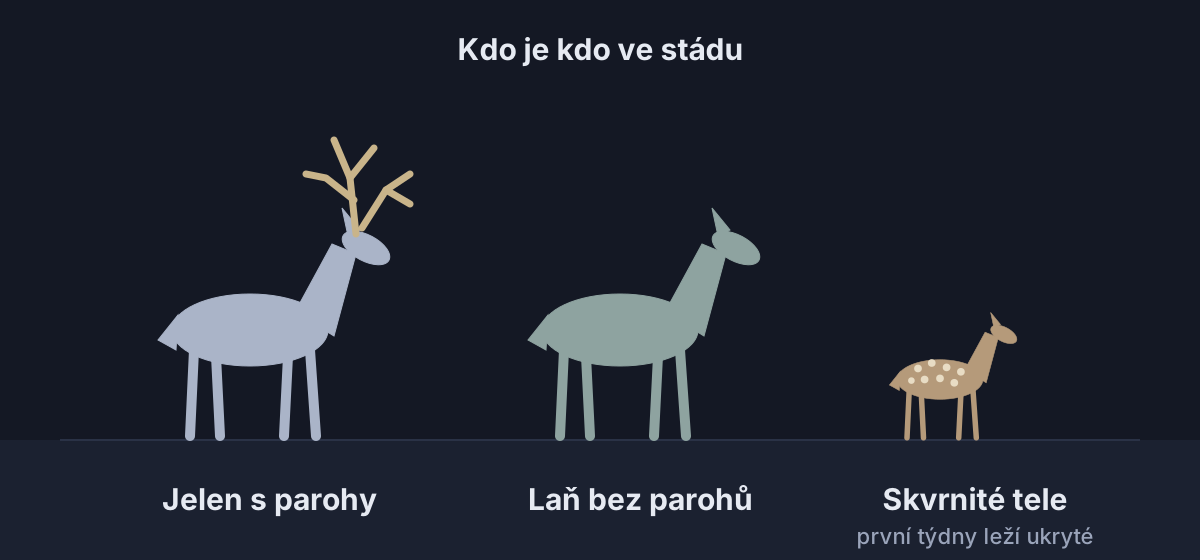
The roar serves two purposes, to attract females and to keep other males away. An experiment also showed that hinds in heat prefer to move towards a roar whose deeper tone reveals a larger male.
A male's voice tells his rivals who is in charge. When that is not enough, fights follow, and these can be life-threatening, according to animal behaviour specialist Luděk Bartoš. In fact, a quarter of stags are injured during the rut, and some do not survive their injuries.
02Curiosities
A throat like a trombone and other surprises of the rut
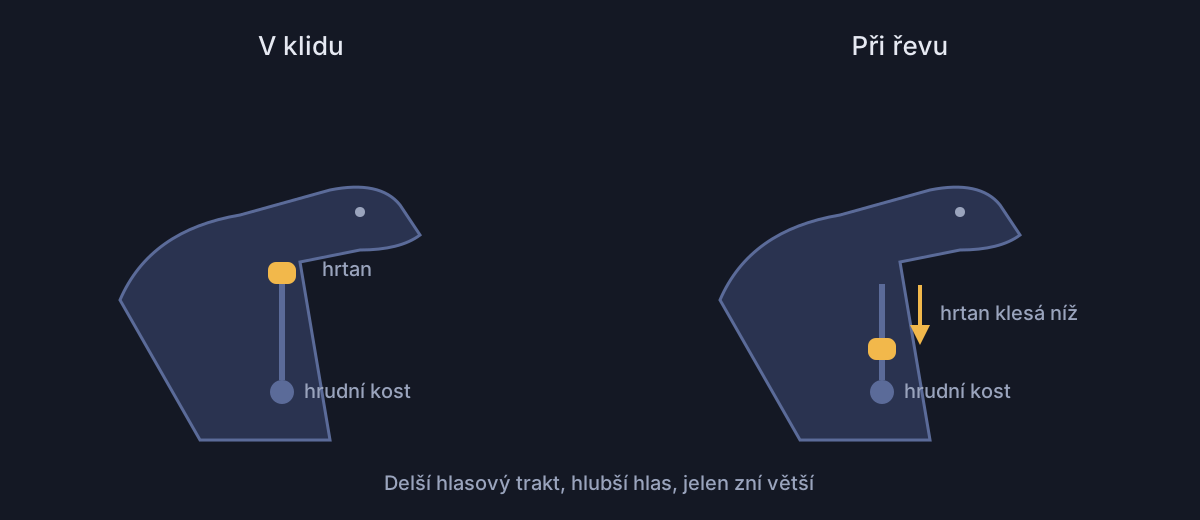
When roaring, a stag lowers his larynx even further than usual, as far as the breastbone. This lengthens the vocal tract, deepens the sound and makes the animal sound bigger than he really is. The study's authors see this as a way of exaggerating body size.
A stag also smells stronger than usual during the rut. According to experts, this is linked to the activity of scent glands, to urination or to rubbing the body against vegetation.
Nor does a single day necessarily mark the end of the rut. According to deer farming data from New Zealand, a hind that does not conceive comes back into season after 18 to 21 days, so roaring may still be heard after the peak.
The timing of the rut is shifting, too. A long-term study of deer on the Scottish island of Rùm found that the rut and calving had moved earlier by an average of up to two weeks over thirty years. The rut there runs from mid-September to mid-November.
03The price of victory
Why autumn's champion stag barely eats
According to researchers on the island of Rùm, the best stags eat rarely if at all and roar day and night. According to Adam Jirsa of the Šumava National Park (the Šumava is a mountain range on the Czech–German border), a stag eats only minimally during the rut.
A stag must guard his group of hinds, trade roars with rivals and, when that is not enough, fight. There is no time left for peaceful grazing. A dominant stag therefore uses an enormous amount of energy over a few weeks, and his condition gradually declines.
The cost shows on the scales. In a scientific study, stags lost an average of roughly 20% of their body weight during the rut. Gamekeepers report losses of 30 to 40 kilograms.
After the rut, stags must recover the condition they lost. In the study the deer did not make up the weight loss by the end of the year. Exhausted top stags also move away from the rutting grounds.
04Right now
The rut is winding down, but you may still come across a lone stag
The rut does not end overnight. Gamekeepers say it ends around mid-October, so it is now winding down, but a lone male may still be heard in some places. You can try your luck at dawn or dusk.
| Day | Prague | Brno | Ostrava |
|---|---|---|---|
| Sun 18/10 | Prague: 7:29 / 18:05 | Brno: 7:19 / 17:58 | Ostrava: 7:13 / 17:50 |
| Mon 19/10 | Prague: 7:30 / 18:03 | Brno: 7:20 / 17:56 | Ostrava: 7:15 / 17:48 |
| Tue 20/10 | Prague: 7:32 / 18:01 | Brno: 7:22 / 17:54 | Ostrava: 7:16 / 17:46 |
| Wed 21/10 | Prague: 7:34 / 17:59 | Brno: 7:24 / 17:52 | Ostrava: 7:18 / 17:45 |
| Thu 22/10 | Prague: 7:35 / 17:57 | Brno: 7:25 / 17:50 | Ostrava: 7:20 / 17:43 |
| Fri 23/10 | Prague: 7:37 / 17:55 | Brno: 7:27 / 17:48 | Ostrava: 7:21 / 17:41 |
| Sat 24/10 | Prague: 7:39 / 17:54 | Brno: 7:28 / 17:47 | Ostrava: 7:23 / 17:39 |
05Where to go
Where you might still hear a stag roar
In 2020, Správa KRNAP reported around 600 red deer on the Czech side of the mountains and said the rut there lasts roughly 14 days. Such a short rut means it may already be over in the mountains by now. A trip to the Krkonoše just to hear stags roar is therefore a gamble at this point.
Red deer live in other Czech forests too, so you can try your luck elsewhere. If you visit a deer park or zoo to see them, these will be captive animals.
06Did you know
Did you know that deer…
07Listening
How to listen, not disturb and return safely
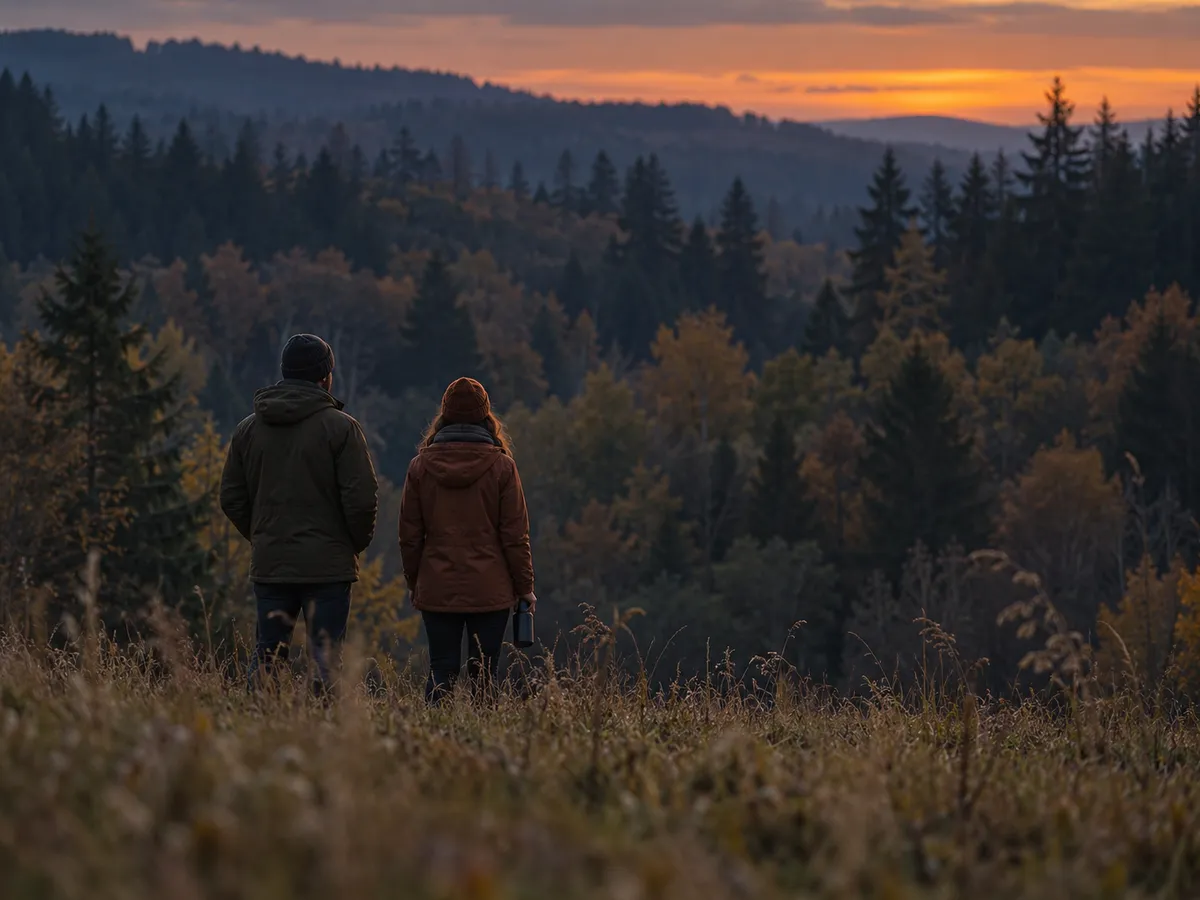
Set out shortly before dusk or in the first hours after daybreak, ideally on a calm morning without wind, when the forest is quiet. The author of one field recording from Portugal writes that under suitable conditions the roar is easily heard from several kilometres away. That is her experience, not a measurement.
A stag defending his group from rivals is not an animal to approach closely. Keep your distance, keep your dog on a lead and stay on marked paths. In the České Švýcarsko National Park (Bohemian Switzerland), for example, quiet zones protect nature that is sensitive to disturbance, and marked trails lead into them all year round.
| Do | Do not |
|---|---|
| Keep your distance and watch from afar | Do not: Approach animals in the rut |
| Keep your dog on a lead | Do not: Let your dog run free |
| Stay on marked paths | Do not: Leave the paths in quiet zones |
| Warm layers and a flask | Do not: Lights, buzzers and loud calling |
Sources14 sources · specific figures come from the sources, the general explanation from expert knowledge
- Frontiers in Ecology and Evolution (Apollonio a kol., 2020)
- Deník.cz (in Czech)
- TN.cz (in Czech)
- Seznam Zprávy (ČTK), Správa KRNAP (in Czech)
- Rum Red Deer Project, University of Edinburgh
- Earth.fm (terénní nahrávka Melissy Pons, Portugalsko)
- ScienceDaily (University of Sussex, Biology Letters)
- Proc. R. Soc. B (Fitch a Reby, 2001), PMC
- Deer Industry New Zealand
- ScienceDaily (University of Cambridge)
- Výpočet Fakt počasí (in Czech)
- Deer Industry New Zealand
- Smithsonian Magazine
- Správa NP České Švýcarsko (komentář k návrhu klidových území, 2019) (in Czech)