

In numbers
7°C
Temperature below which winter tyres come into their own
4mm
Legal minimum tread depth of a passenger car's winter tyre
over 15m
Difference in wet braking distance from 80 km/h between the best and worst winter tyre
By afternoon the sun is out and the thermometer reads over ten degrees, yet in the morning there was hoar frost on the verge. That morning chill is enough to make a summer tyre stiffen and lose grip, even before any snow has fallen. It therefore pays to switch to winter tyres as soon as temperatures regularly drop below seven degrees, and to treat 1 November merely as the date from which Czech law may step in.
01The law
The law, 1 November and the Zimní výbava (winter equipment) sign
| Situation | Recommendation | Why |
|---|---|---|
| Mornings stay below 7 °C, days reach around 10 °C | Recommendation: Switch | Why: Summer rubber stiffens in the cold and loses grip, and nights can be much colder than days |
| You are heading into the mountains or over mountain passes | Recommendation: Switch before the trip | Why: Snow or ice may lie higher up earlier than in the lowlands, and on stretches with the Zimní výbava sign the requirement always applies |
| The forecast warns of snow, freezing rain or black ice | Recommendation: Switch at once and do not drive on summer tyres | Why: From 1 November to 31 March the law requires winter tyres even when snow or ice is only expected |
| You drive only in town and not much | Recommendation: Winter tyres, or good all-season ones | Why: Morning frost is a risk in town too, and all-season tyres are a compromise better suited to mild winters and low mileage |
| Dry, warm October, mornings above 7 °C | Recommendation: Wait a little longer | Why: Winter tyres are designed for the cold, and in a test they braked worse on dry roads than all-season tyres |
| November, dry road, no ice expected | Recommendation: Not required by law, but switch if mornings fall below 7 °C | Why: The requirement depends on snow, ice, frost or the expectation of them, not on the date alone |
| Situation | Winter tyres |
|---|---|
| From 1 November to 31 March, with continuous snow, ice or frost on the road | Winter tyres: Mandatory |
| From 1 November to 31 March, when the weather suggests snow, ice or frost can be expected during the journey | Winter tyres: Mandatory |
| From 1 November to 31 March, the road is dry and nothing of the kind is expected | Winter tyres: Not required by law |
| A stretch of road with the Zimní výbava sign | Winter tyres: Always mandatory, whatever the road surface |
| Spare tyre used to reach a garage after a puncture | Winter tyres: Exempt, the requirement does not apply |
| Where the requirement applies, passenger cars | Winter tyres: On all wheels, with at least 4 mm of tread |
Czech law takes a narrower view than the widespread belief that winter tyres are compulsory from 1 November. The date alone is not enough. The requirement applies only when there is continuous snow, ice or frost on the road, or when the weather suggests they can be expected during the journey. On a dry road with no prospect of ice, the law does not oblige you to fit winter tyres.
The exception is the Zimní výbava road sign. On any road where it stands, winter tyres are always required, regardless of the state of the road surface.
Where the requirement applies, a passenger car must have winter tyres on all its wheels. Winter tyres on the driven front axle alone will help when pulling away, but summer tyres at the back lose almost all their handling qualities in winter, and the car can easily go into a skid.
02Temperature
Seven degrees on average, plus the morning lows
A summer tyre is built for warmth. As the temperature falls its rubber compound stiffens and, roughly below seven degrees, loses grip, whereas a winter compound stays supple and is designed for temperatures from seven down to minus twenty-five degrees. A winter tread also has more sipes and edges, which help on slippery surfaces.
One tyre manufacturer explains this through the so-called glass transition, the temperature below which rubber turns from a pliable material into a stiff, unyielding one. In the cold a summer compound approaches this threshold, which is why its traction and braking performance below seven degrees do not tail off gradually but drop sharply. A winter compound has its glass transition much lower, so it keeps gripping where a summer tyre is already sliding.
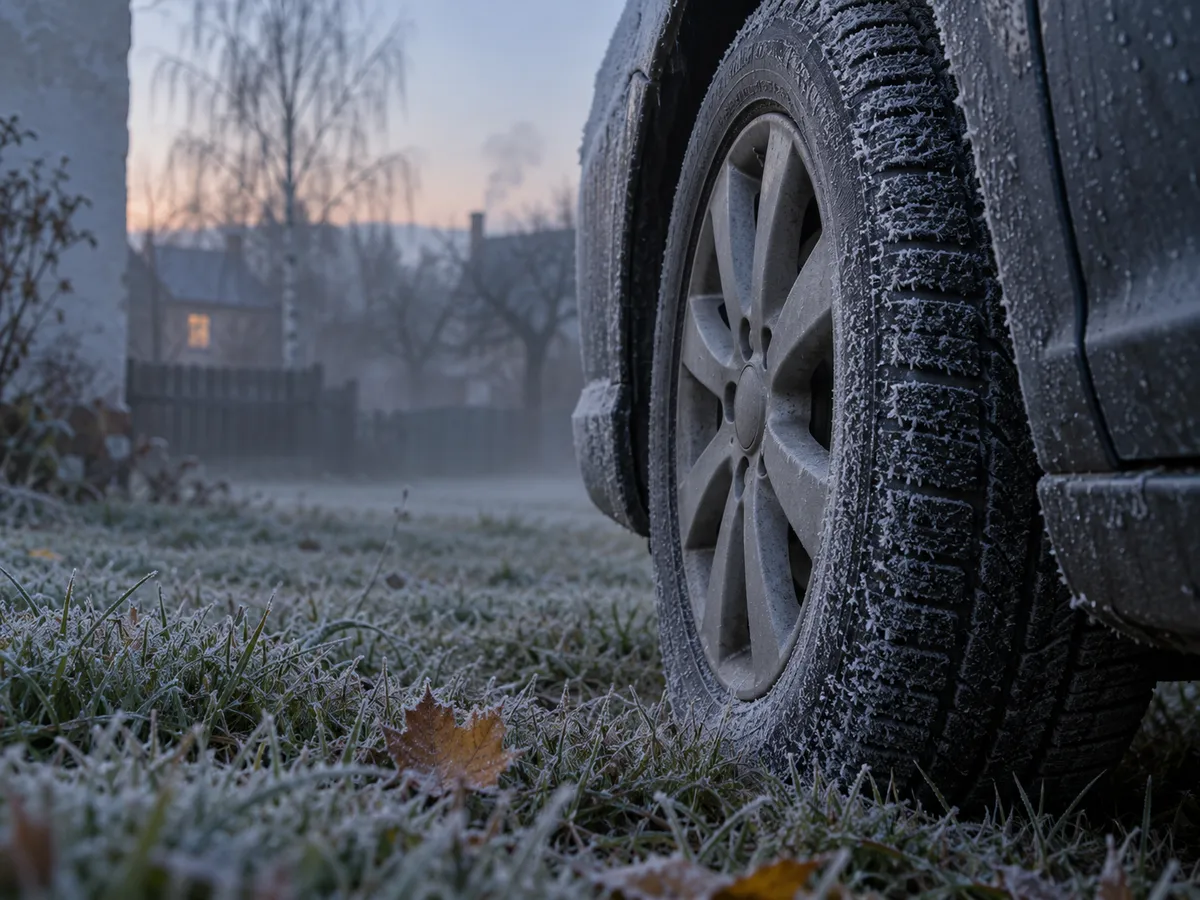
Seven degrees is not, however, a line beyond which a summer tyre stops working overnight. According to one European test, switching at seven degrees is recommended mainly because summer tyres fail in a light frost of around minus two degrees combined with rain or snow. Those who switch in good time are ready before such a morning arrives.
What matters is a temperature that regularly falls below seven degrees. In practice it is worth watching the average daily temperature in the forecast, together with the morning lows, because even after an afternoon of ten to twelve degrees the night can turn considerably colder.
03Tests
What tests on wet roads, snow and ice have shown
An independent test on a wet road confirms that the seven-degree threshold is more than a rule of thumb. The braking distance of summer tyres began to lengthen sharply as soon as the temperature fell below seven degrees. Even at ten degrees, summer tyres did not outperform all-season ones in the wet, although the differences between them were negligible.
On ice the gap between summer and winter tyres is even wider. In a test on a surface simulating ice, new summer tyres needed roughly twice the distance to stop as the best winter tyres.
| Tyre | Braking distance |
|---|---|
| Best winter tyre in the test | 17.7 m |
| New summer tyre | 35.5 m |
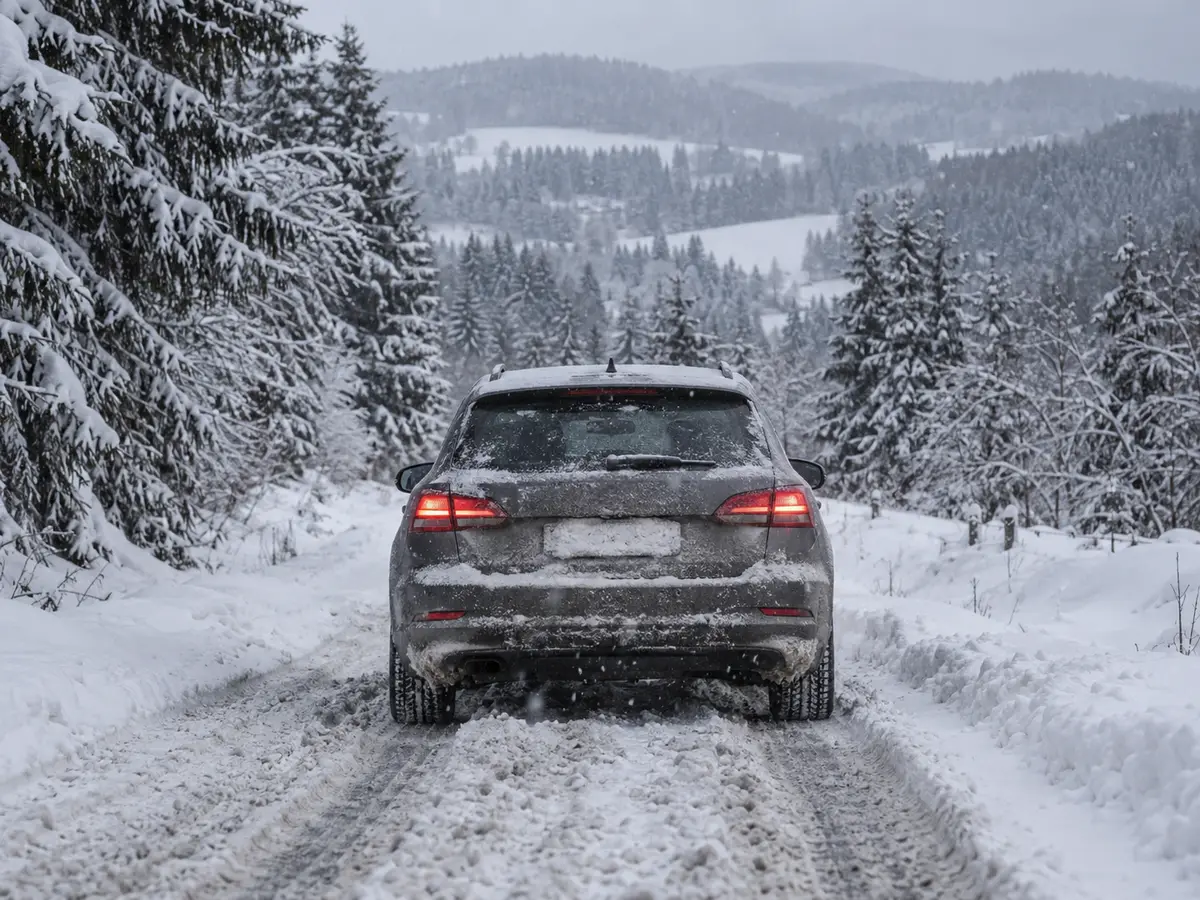
Having winter tyres is not the same as having good winter tyres. A large 2025 test by ADAC, the German automobile club, put dozens of models of the same size through their paces and rated more than a third of them as inadequate. When braking in the wet, the gap between the best and worst tyre was longer than three cars parked nose to tail.
| Measure | Result |
|---|---|
| Models tested | 31 |
| Rated inadequate | 11 |
| Difference in wet braking distance from 80 km/h between best and worst | more than 15 m |
A common objection is that modern cars have ABS and stability control. But the electronics can only meter out the force a tyre is able to transmit to the road, and once a summer compound has lost its grip in the cold, even the best system has nothing to work with.
04The cost of haste
Switching early has its price too
Winter tyres are designed for the cold, and it shows on a dry road. In a comparative test of all-season and winter tyres of one size, all-season tyres braked better on dry roads than winter ones. The best all-season tyre stopped more than six metres shorter from 100 km/h than the worst winter tyre. These are the extreme results, but the difference is noticeable.
Infographic
Braking on a dry road from 100 km/h
On snow the tables turned in the same test, and winter tyres generally came out ahead. The lesson for switching is simple. Do not rush in a warm October, but do not wait for the first snow either.
A winter tyre also ages considerably faster than a summer one, because chemical processes gradually deplete the additives in its compound. Needless weeks on warm tarmac wear it down on top of that.
05The tyre
Tread, the snowflake and all-season tyres
How many millimetres are still enough
A new tyre has a tread depth of roughly eight millimetres, which wears down gradually with driving. Depth matters especially on a winter tyre, because it is the deep grooves and sipes that help it grip on snow and slippery surfaces.
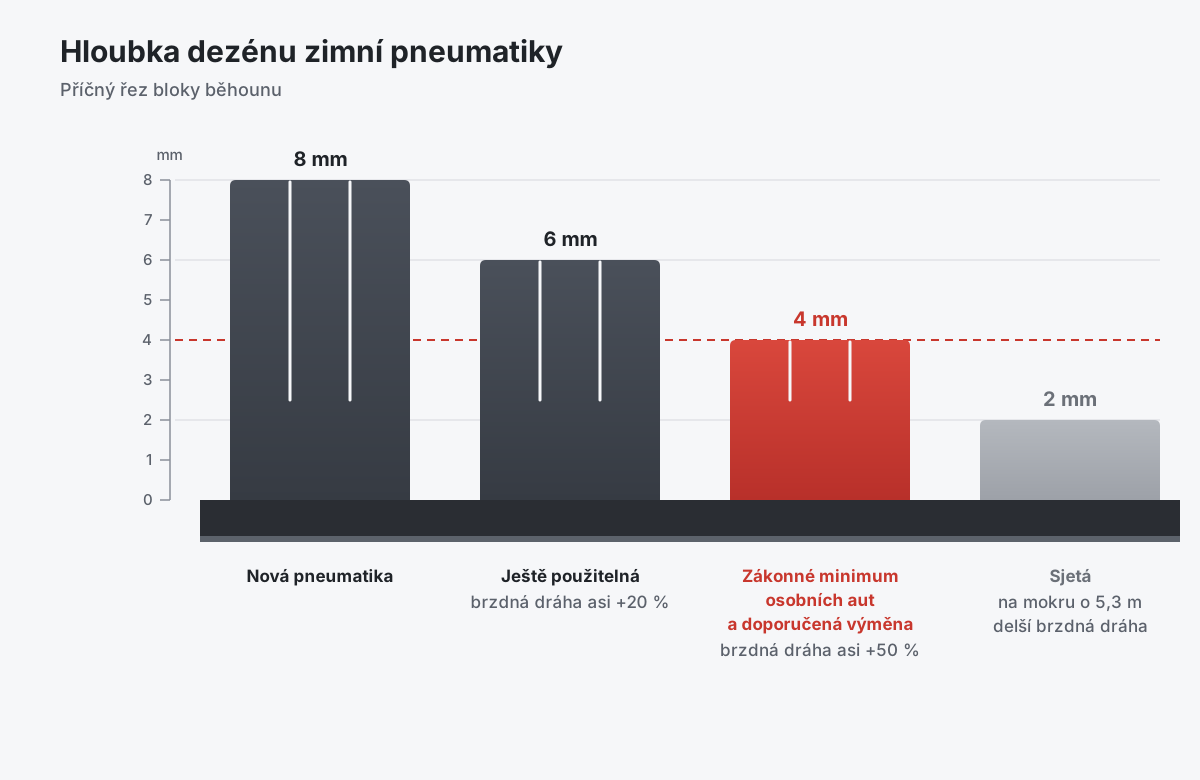
| Depth | What it means |
|---|---|
| around 8 mm | What it means: New tyre |
| 6 mm | What it means: Still usable, but braking distance is about 20 % longer |
| 4 mm | What it means: Legal minimum for passenger cars, braking distance about 50 % longer, time to replace |
| 2 mm | What it means: In the wet the car stops 5.3 m further than on new tyres |
| 6 mm on vehicles over 3,500 kg | What it means: Legal minimum on the wheels of drive axles |
At around six millimetres a winter tyre is still usable, although it brakes noticeably worse than a new one. At four millimetres it is time to replace it. That is the legal minimum for passenger cars, and below it the tyre loses its performance on snow as well as its so-called self-cleaning effect. ADAC advises replacing winter tyres at exactly four millimetres, and its study this year backed that recommendation.
The M+S marking and the alpine symbol
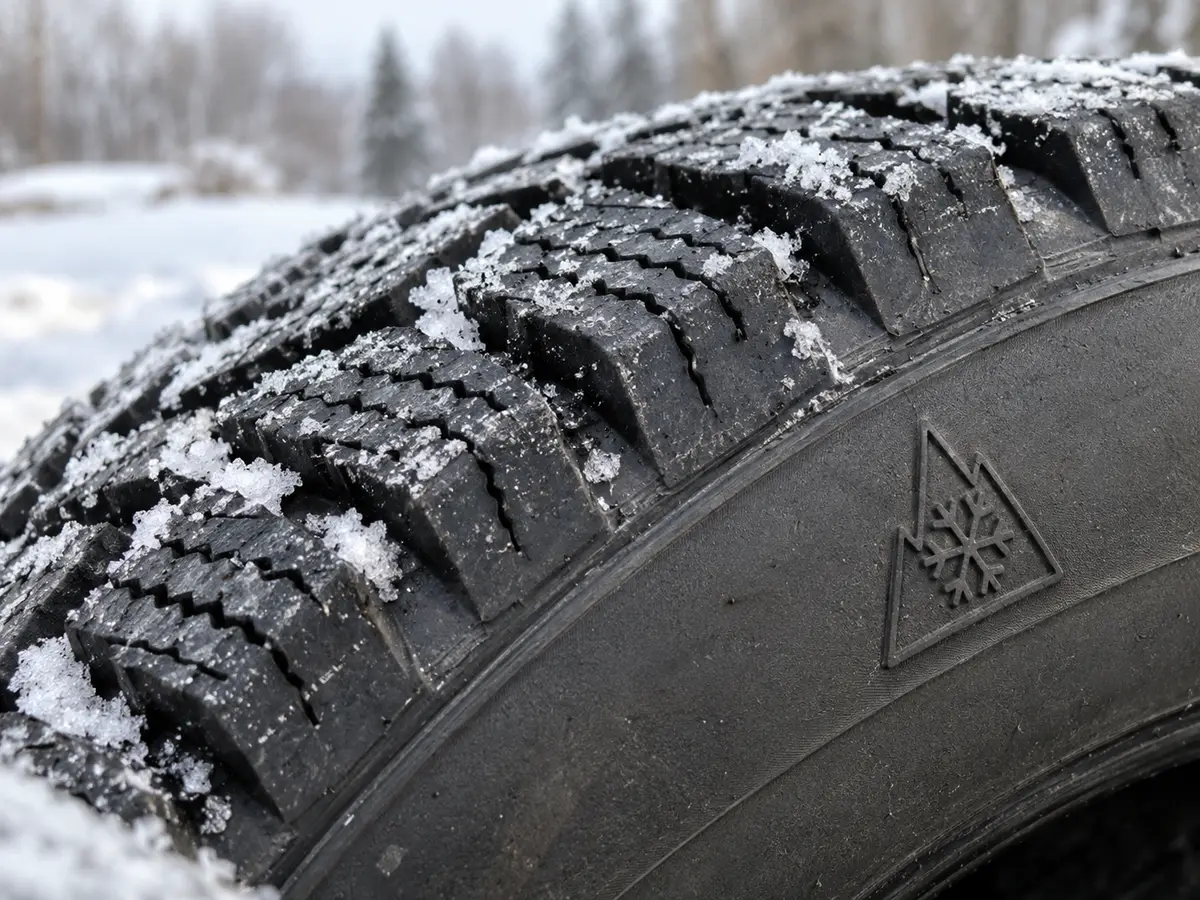
The sidewall of a winter tyre usually carries two markings. The abbreviation M+S stands for mud and snow and appears on tyres that offer better traction mainly on muddy roads and in slush.
A more reliable guide is the alpine symbol, the outline of a three-peaked mountain with a snowflake, which usually sits next to the M+S marking. It guarantees that the tyre is a genuine winter tyre, so it is worth looking for when buying.
All-season tyres
All-season tyres are a compromise between summer and winter tyres and spare you the seasonal changeover. They are better suited to areas with mild winters, such as South Moravia in the south-east of the country, and to drivers who cover few miles.
In the test mentioned above, good all-season tyres could rival winter tyres in light to moderate snow and outperformed them on dry roads. But anyone who often drives into the mountains or lives where winters tend to be harsh has a bigger safety margin with winter tyres.
06Fines
What driving without winter tyres costs
If police at a roadside check find that a driver does not have the required winter tyres, the driver faces an on-the-spot fine, or a higher fine in administrative proceedings. The amounts come from older police publications, so we give their dates as well.
| Proceedings | Fine of up to | Date of information |
|---|---|---|
| On the spot | CZK 2,000 | November 2021 |
| In administrative proceedings | CZK 2,500 | 2016 |
The impact on comprehensive car insurance can be more painful. According to a police publication from 2016, an insurer may reduce a payout if it is shown that the damage was directly linked to unsuitable tyres.
07Spring
When to go back to summer tyres
In spring the same rule applies as in autumn, only in reverse. The period during which the law requires winter tyres in snow and ice ends on 31 March. From April you can therefore go by the temperature and switch once the average daily temperature stays above seven degrees and the morning frosts have ended.
There is no point rushing, but no point delaying needlessly either. Summer tyres lose grip on a frosty April morning or in late snowfall, while winter tyres are built for the cold and in a test braked worse on dry roads than all-season tyres.
In the mountains, snow or ice can linger on the roads well into spring, even when the trees in the lowlands are already in blossom. If you are heading there, keep the winter tyres on. Wherever the Zimní výbava sign stands, the requirement applies regardless of the road surface.
The calendar, then, mainly tells you when the law can penalise you for summer tyres, not when they stop gripping. What counts is the thermometer and the forecast for the coming mornings, and those who follow them will switch at the right moment in both autumn and spring.
Sources14 sources · every number and claim in the article comes from them
- Zákony pro lidiZákon č. 361/2000 Sb. (Act No. 361/2000 Coll., the Czech Road Traffic Act, via Zákony pro lidi) (in Czech)checked 15 October 2026
- Výměna na zimní pneumatiky se blíží (Czech Police, the switch to winter tyres is approaching) (in Czech)checked 13 October 2026
- auto.cz: Zimní výbavaZimní výbava – především zimní pneumatiky (auto.cz, winter equipment, above all winter tyres) (in Czech)checked 13 October 2026
- Výměna pneumatik z letních na zimní (Czech Police, Central Bohemian Regional Directorate, text of 1 November 2021) (in Czech)
- Krajský úřad Libereckého kraje (Liberec Regional Authority, Road Safety Team, 2015) (in Czech)
- Test zimních pneumatik ADAC 2025 (arecenze.cz, ADAC winter tyre test 2025) (in Czech)checked 13 October 2026
- Zimní pneumatiky nejsou zbytečné (auto.cz, winter tyres are not pointless) (in Czech)checked 13 October 2026
- Sníh, námraza a led na silnici (Czech Police, snow, frost and ice on the road) (in Czech)checked 13 October 2026
- 2024 All Season and Winter Tyre Test (Tyre Reviews)checked 13 October 2026
- Tyrepress: KumhoWho in the UK needs winter tyres? (Tyrepress, Kumho)checked 13 October 2026
- What are the best tyres for this winter? We have tested 19 sets (Autónavigátor, joint test with nonstopgumi, 2015)
- Testing winter, summer and all-season tires at different temperatures (Wheel-Size.com, Tyre Reviews test, Test World, Finland)
- Od listopadu jsou povinné zimní pneumatiky, ale jen někde a někdy (Autohled, on the ADAC study of 8 September 2026) (in Czech)
- Zimní výbava (Czech Police, winter equipment) (in Czech)checked 13 October 2026