
In numbers
13°C
The average daily temperature outdoors must fall below this on two consecutive days before heat supply begins
20°C
The temperature a building's design assumes for the living room, bedroom and children's room
24°C
The temperature the design of a permanently occupied home assumes for the bathroom
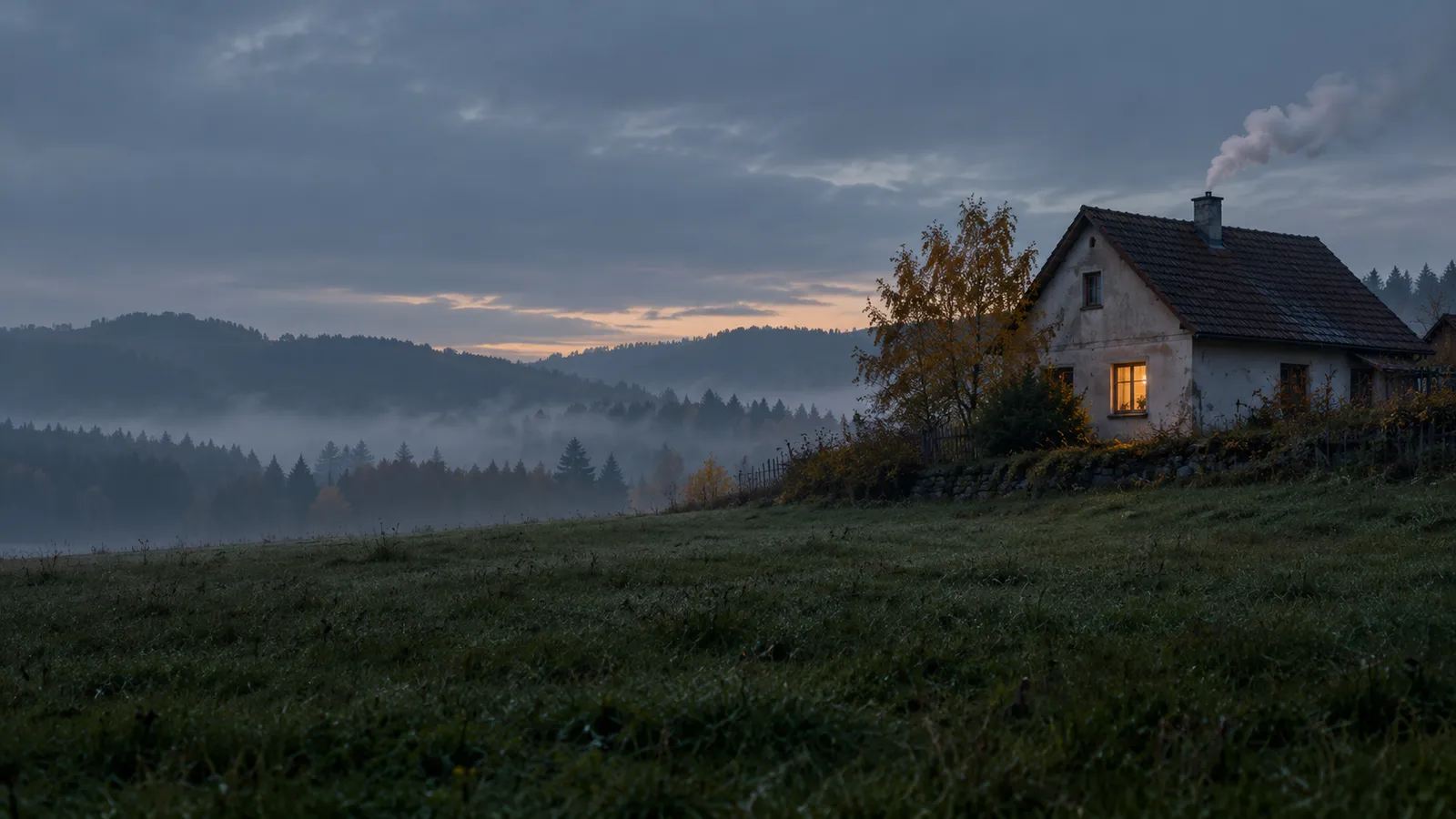
The morning thermometer reads just a few degrees and the flat is starting to feel chilly. Yet when the heating actually comes on is decided less by the calendar than by the weather. Where heat is supplied by a heating plant or another supplier, the rule is that the average daily temperature outdoors must fall below 13 °C on two consecutive days, with no warming above that threshold expected the following day.
01At a glance
When to heat and when to wait
If you live in a building that receives heat from a supplier, simply compare today's situation with the table below. Three things count at once, namely a date between 1 September and 31 May, the average daily temperature on two consecutive days, and the forecast for the following day.
| Situation | Heat? |
|---|---|
| It is between 1 September and 31 May, the average daily temperature has been below 13 °C for two days running and the forecast expects no warming | Heat?: Yes, heat supply begins |
| Only one night or one day has been cold | Heat?: Not yet, the rule requires two consecutive days |
| Two days below 13 °C, but the following day is expected to warm above 13 °C | Heat?: Not yet, the outlook counts too |
| During the heating period the average has been above 13 °C for two days running and no cooling is expected the following day | Heat?: Heating is reduced or suspended |
| It is summer, outside the heating period, but unusually cold | Heat?: Only with the consent of at least two thirds of end consumers and if technical and supply conditions allow |
| You heat with your own boiler or heat pump | Heat?: The two-day rule concerns heat supply, so you decide yourself when to start heating |
02The decree
What the heating decree actually says
The rules for heating are set out in Decree No. 194/2007 Sb. (Sb. refers to the Czech Collection of Laws), whose current wording has applied since November 2014. The heating period, as the decree calls the heating season, begins on 1 September and ends on 31 May the following year. This window merely marks the time when heating is expected, and radiators do not warm up of their own accord on the first of September.
The actual start is governed by the weather in a given place. Heat supply begins when the average daily outdoor air temperature falls below 13 °C on two consecutive days and, judging by how the weather is developing, it cannot be expected to rise above that threshold the next day.
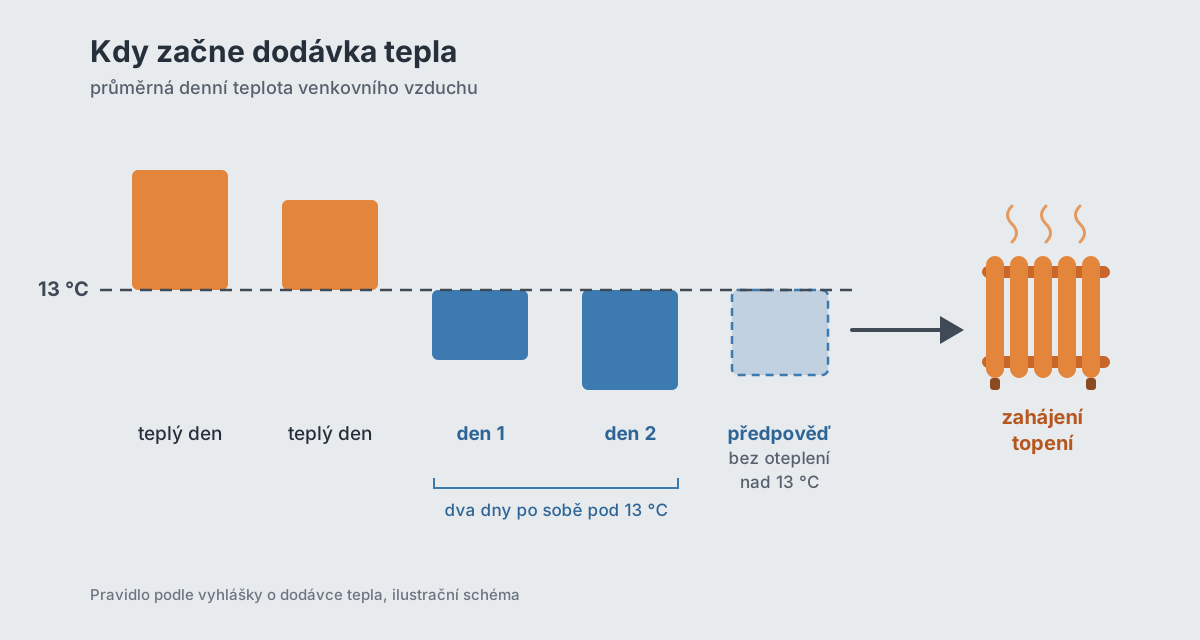
That is why neither building managers nor heating plants react to the first cold night. The rule requires lasting cold, so there is no heating for a brief chill that is quickly followed by the return of warm Indian summer days.
The same rule also works in reverse, typically in spring. During the heating period, heating is reduced or suspended when the average daily temperature rises above 13 °C on two consecutive days and, judging by how the weather is developing, no drop is expected the following day.
How the average daily temperature is calculated
The average is not based on the day's lowest or highest temperature. Temperature is measured in the shade at 7:00, 14:00 and 21:00, the evening reading is counted twice and the total is divided by four. If it is 8 °C in the morning, 18 °C in the afternoon and 11 °C in the evening, the average comes out at 12 °C, which is below the threshold.
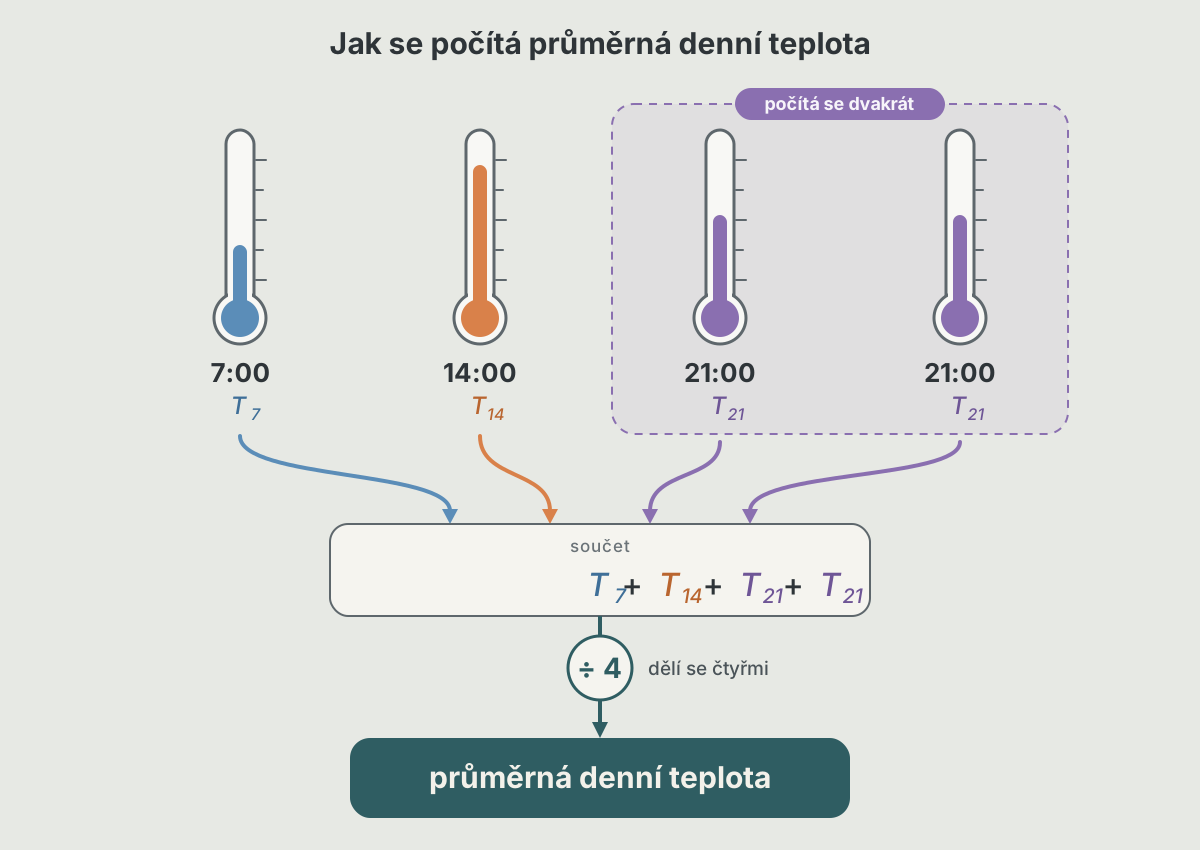
The afternoon temperature therefore makes up only a quarter of the result, while the evening one accounts for a full half. If it cools quickly after dark, the average is pulled down more than a warm afternoon would suggest.
03Did you know
What most people don't know about heating
The two-day rule looks simple, but it hides several details that are rarely discussed. They concern why neighbouring towns do not start heating on the same day, what is allowed outside the heating period, how heating adapts to the weather and who does not need to wait for the rule at all.
Heating that follows the outdoor thermometer
The decree also requires heating in buildings to be regulated, in particular according to the weather or the outdoor temperature in relation to the indoor temperature, unless the heat producer or distributor already does so. Sources with hopper-fed solid-fuel boilers are exempt.
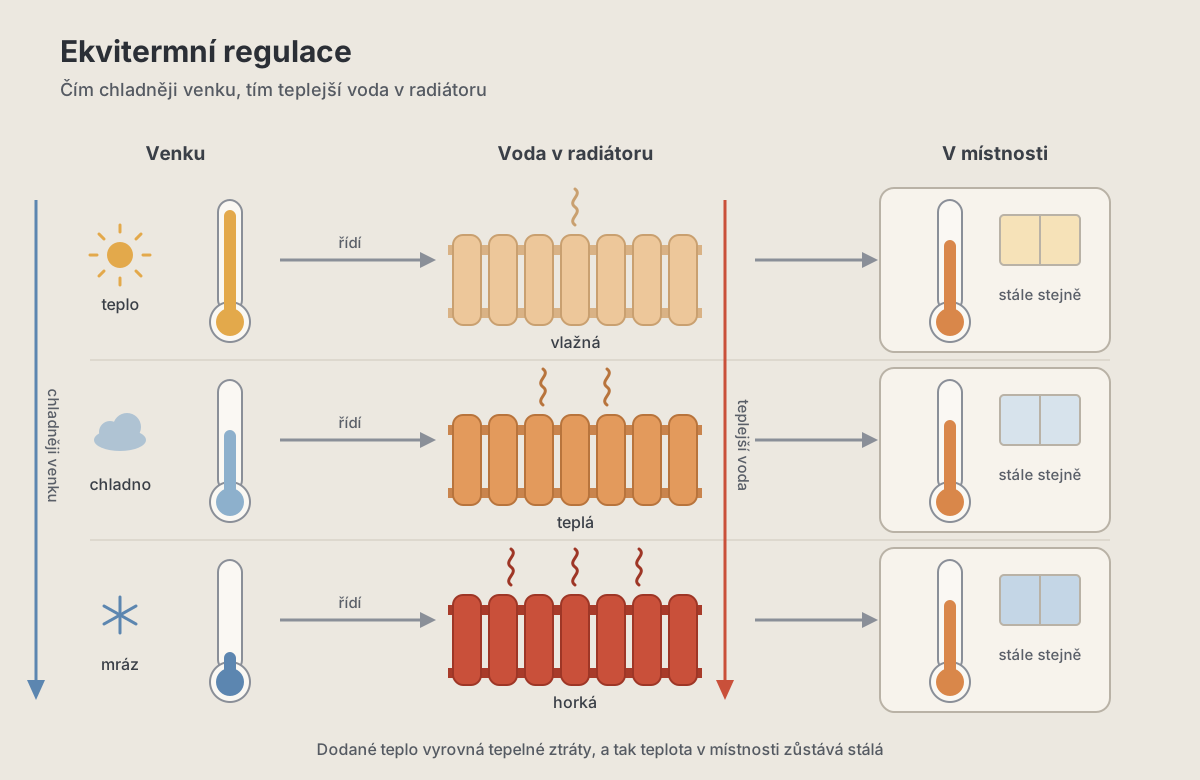
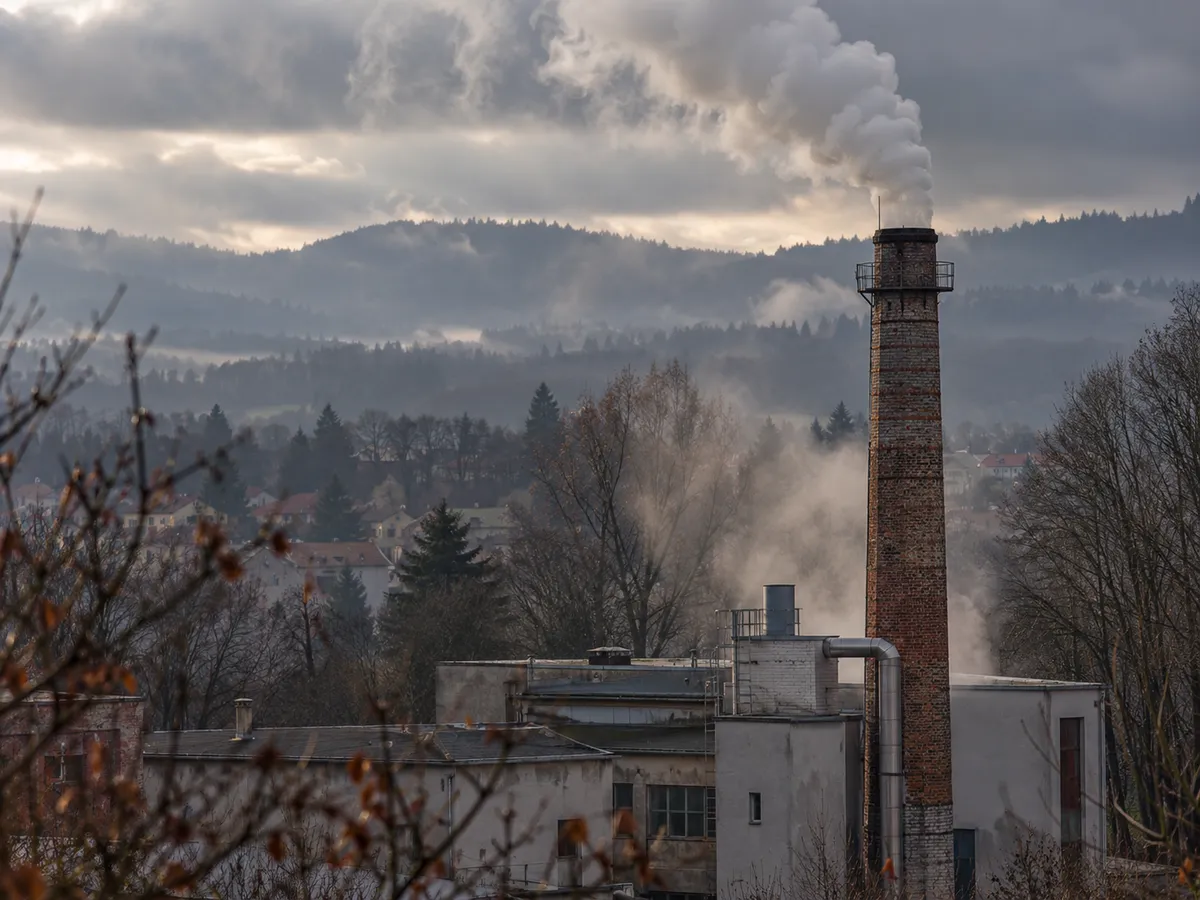
Control based on outdoor temperature in this way is known as weather-compensated control. When the temperature outside drops, the system raises the temperature of the water in the radiators so that the heat supplied offsets the room's heat losses, and the room stays just as warm. It can be used in a family house with its own boiler as well as in a block of flats connected to district heating from a heating plant.
04This year
When heating usually starts and how to tell this year
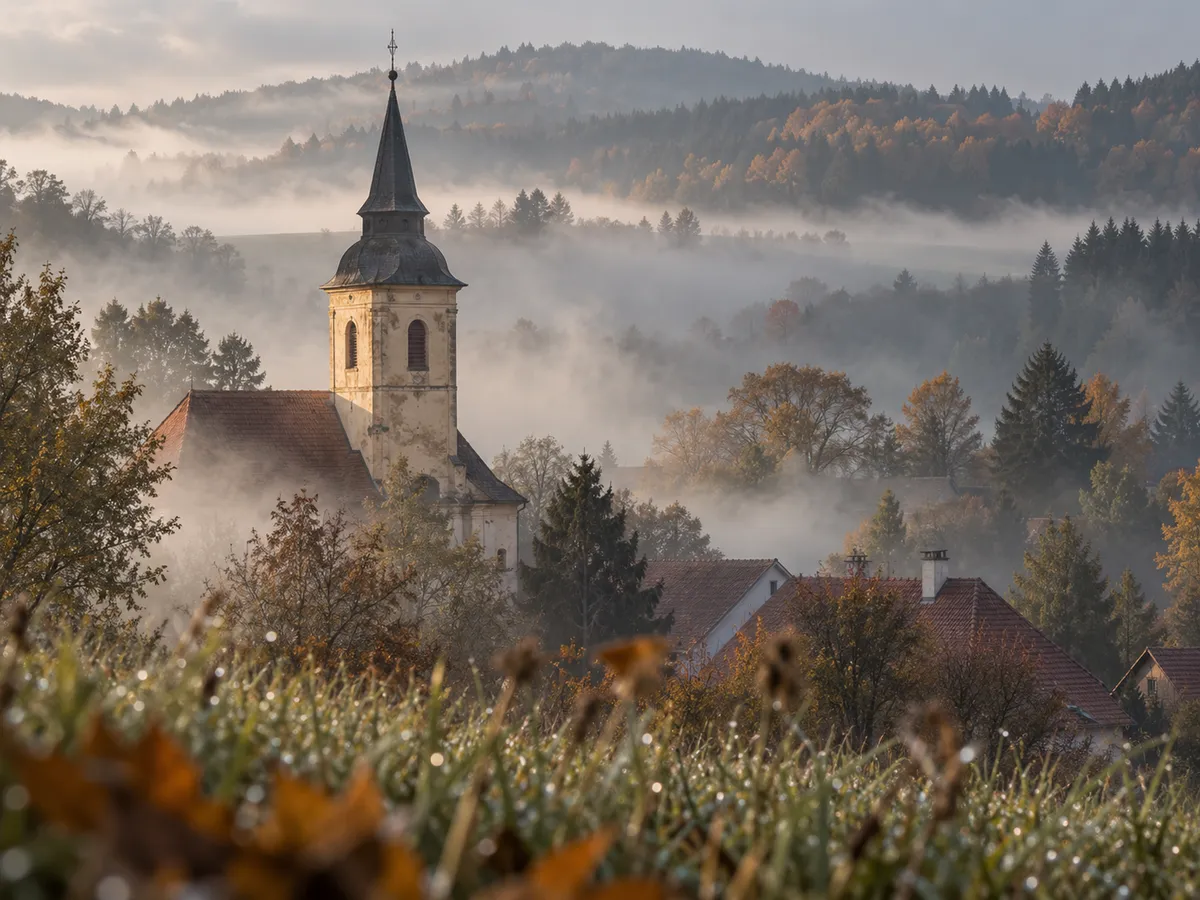
According to the Czech District Heating Association, long-term averages show that heating in the Czech Republic begins around 17 September. By mid-October, then, the usual start of the heating season is roughly a month behind us.
We do not yet have verified data from individual weather stations for this autumn, so we are not giving an exact date on which the average first fell below 13 °C on two consecutive days. An estimate could easily mislead here, as a few tenths of a degree can decide whether the condition is met.
The day also varies from place to place, because heating plants join in according to local conditions. You can, however, check for yourself whether the condition applies where you live, using the three daily readings and the forecast.
How to check the condition yourself
- 01
Work out the daily average
Take the temperatures measured in the shade at 7:00, 14:00 and 21:00, count the evening one twice and divide the total by four.
- 02
Watch for two days in a row
The condition is met only when the average falls below 13 °C on two consecutive days, one cold day is not enough.
- 03
Check the outlook
If the forecast for the following day promises warming above 13 °C, heat supply does not begin yet.
05Landscape
Lowlands and mountains start heating at different times
The decree does not say the whole country should start heating at once. It works with the average daily temperature in the relevant place or locality, so each place falls below 13 °C on a different day.
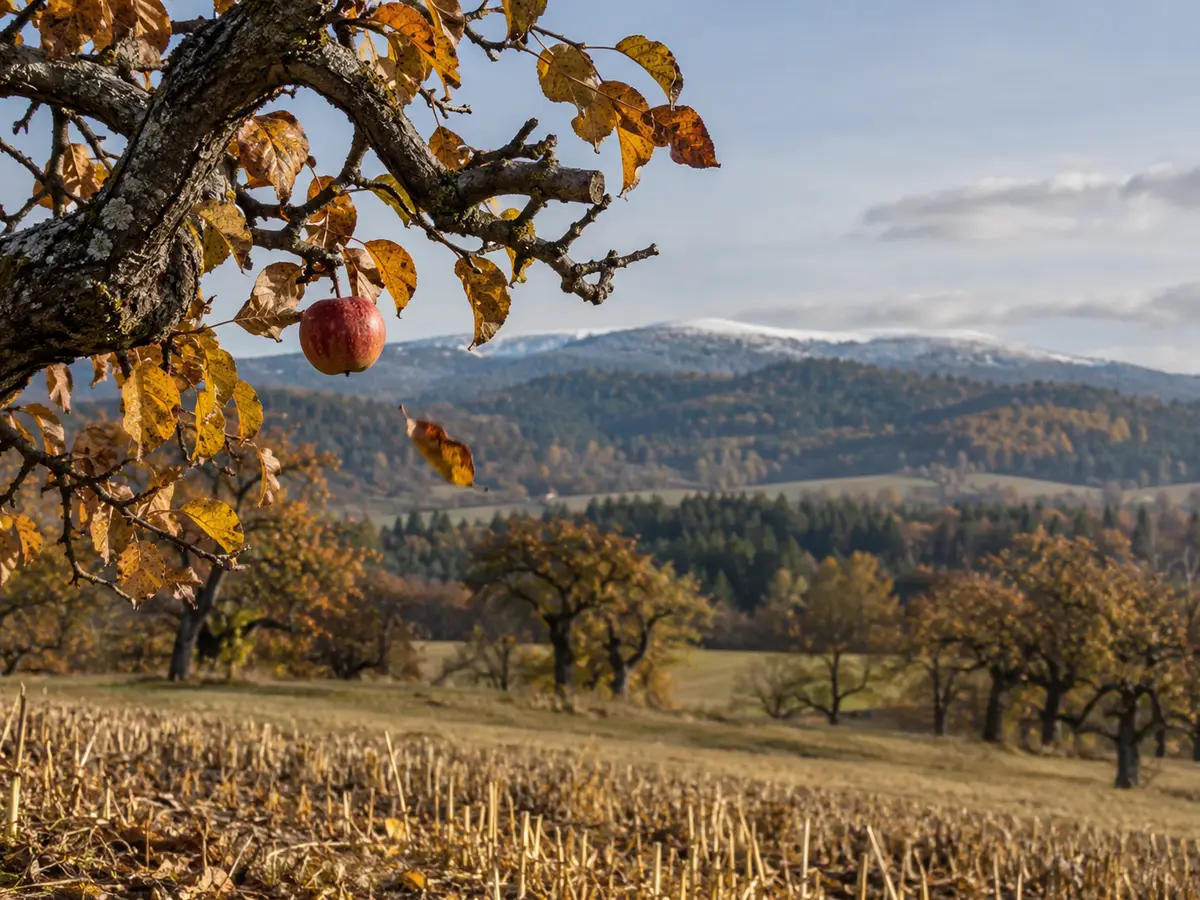
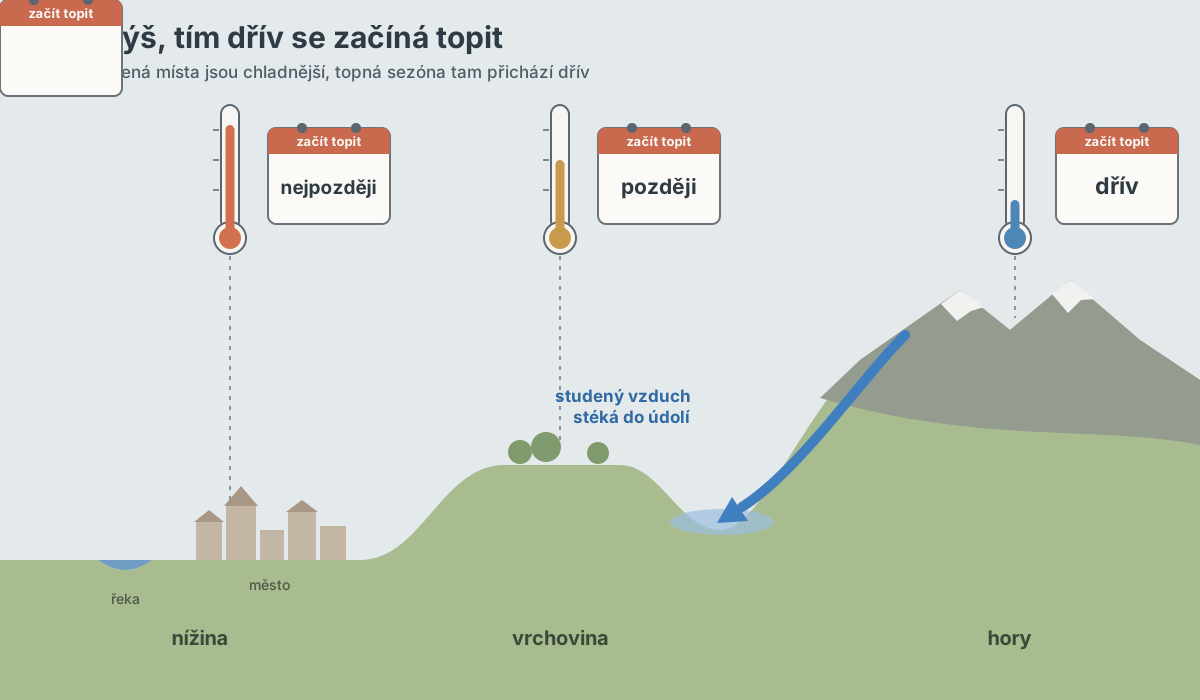
Altitude plays a big part. Air is usually colder the higher you go, so the average generally falls below 13 °C in the mountains earlier than in warm lowlands such as southern Moravia, the country's south-eastern wine region, or the Polabí, the lowlands along the Elbe. We do not yet have verified data for individual stations, however, so we describe only the general principle.
Altitude is not the only factor, though. On clear, calm autumn nights cold air drains into valleys and basins, where fog then often lingers, so even lower-lying places in enclosed valleys can have a colder average than the surrounding slopes.
| Type of place | When heating usually starts | Why |
|---|---|---|
| Mountain villages and ridges | When heating usually starts: First | Why: Air is colder with altitude and the average drops below 13 °C early |
| Highlands and foothills | When heating usually starts: A little later | Why: Colder than the lowlands, but warmer than the mountains |
| Valleys and basins | When heating usually starts: Depending on the weather, even earlier than their altitude would suggest | Why: Cold air collects in them on clear nights |
| Warm lowlands, southern Moravia and the Polabí | When heating usually starts: Last | Why: Low elevation keeps the average above the threshold for longer |
06At home
How warm a flat should be
The decree does not tell you what temperature to set at home. It lists so-called design temperatures, which a building's design is based on, and flats are to be heated from 6:00 to 22:00 so that they reach these on average.
| Room | Design temperature |
|---|---|
| Living room, dining room, study | 20 °C |
| Bedroom and children's room | 20 °C |
| Bathroom | 24 °C |
| Heated hallway and corridor | 15 °C |
The bathroom has the highest value, which makes sense, as people spend time there undressed and wet. Heated corridors and hallways, by contrast, are places people merely pass through, and the decree assumes 15 °C for them.
07Savings
Why overheating doesn't pay
Every extra degree costs money. According to the Ministry of Labour and Social Affairs handbook Zkrotíme energie v domácnosti (Taming Energy at Home), written by experts from SEVEn, a Czech energy-efficiency consultancy, lowering the temperature in a flat by 1 to 2 °C cuts total heating costs by as much as 5 to 10 per cent.
Overheating does not only show up on the bill. Warmer air can hold more water vapour, and when it is heated without added moisture its relative humidity falls, so an overheated flat feels dry. Many people also sleep better in a cooler bedroom.
Quick tips for the heating season
- 01
Don't overheat
A degree or two less is a small change that will show on your heating bill. Check the temperature with a thermometer, not by feel.
- 02
Air rooms in short bursts
Open the windows wide, wait a few minutes and then close them all again, rather than leaving them ajar all day.
- 03
Before you complain
Check whether there have already been two days with an average below 13 °C and an outlook with no warming. The decree requires heating in line with the building's design from 6:00 to 22:00.
Sources5 sources · specific figures come from the sources, the general explanation from expert knowledge
- Vyhláška č. 194/2007 Sb. (Section 2(6), published on epravo.cz) (in Czech)
- Vyhláška č. 194/2007 Sb., kterou se stanoví pravidla pro vytápění a dodávku teplé vody (Annex 1, published on TZB-info) (in Czech)
- Teplárny v Česku zahájí topnou sezónu proti loňsku o měsíc dřív (oEnergetice.cz, ČTK news agency report citing the Czech District Heating Association, 11 September 2024) (in Czech)
- Princip ekvitermní regulace a její výhody (company article by ENBRA, a.s., published on ESTAV.cz) (in Czech)
- Zkrotíme energie v domácnosti (handbook of the Czech Ministry of Labour and Social Affairs (MPSV), written by SEVEn, November 2022) (in Czech)