

In numbers
about220m
Highest lava fountain of episode 55 above the surrounding ground
39days
Intermittent lava overflows before episode 55, a record-long prelude to the fountains
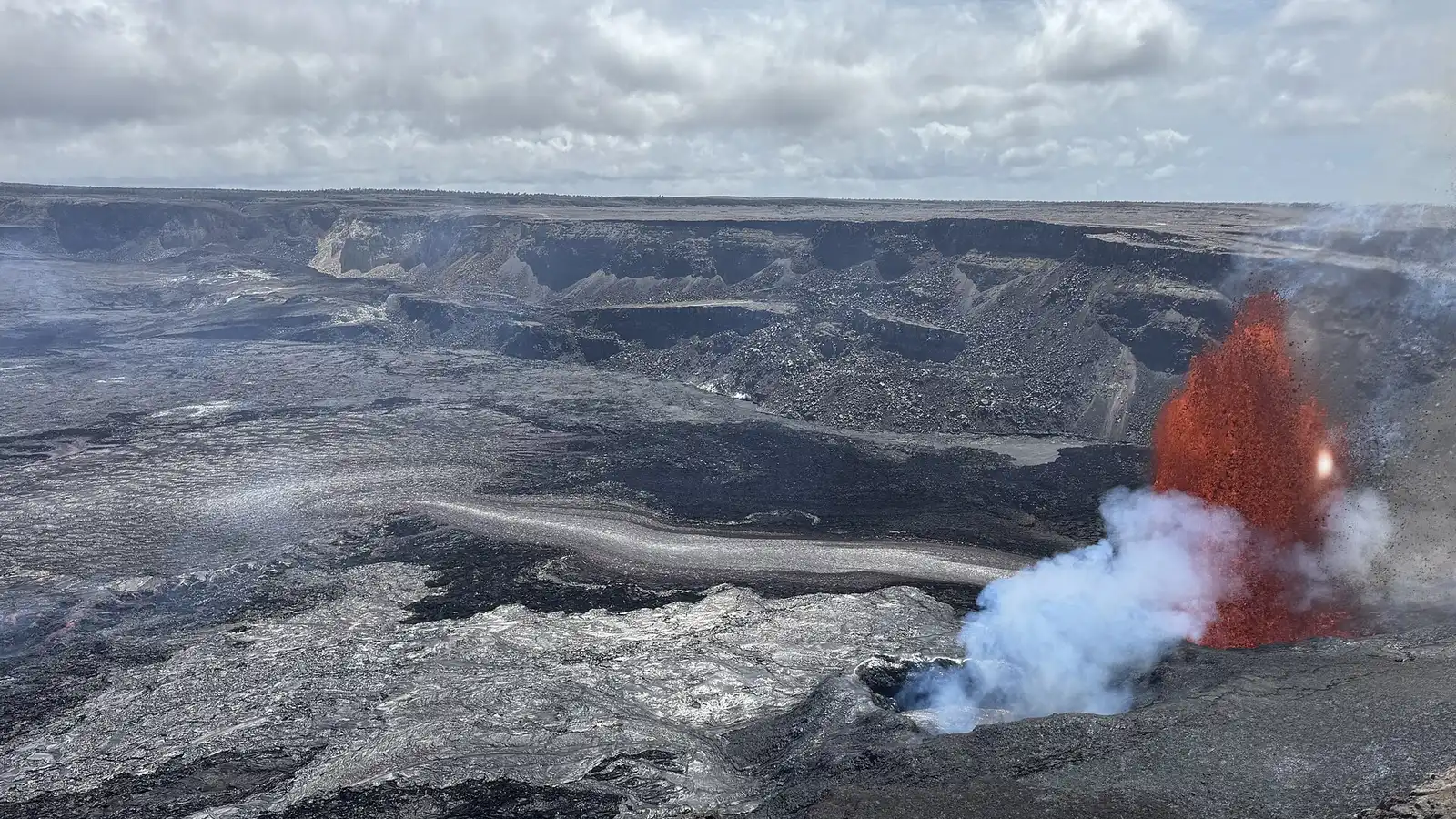
A lava fountain in Halemaumau crater at the summit of Kilauea erupted on 17 October at 3:19 local time, for the first time since 25 August. It rose to about 220 metres above the ground and stopped abruptly at 9:03. It was the 55th episode of the eruption, which began on 23 December 2024.
01What happened
The fifty-fifth episode in under six hours
The highest fountain shot out of the northern vent. According to the US Geological Survey (USGS), it was preceded by 39 days of intermittent lava overflows, a record-long spell of activity before the fountains began. Almost two months had passed since the 54th episode.
| Item | Value |
|---|---|
| Start | Value: 17 October, 3:19 local time |
| End | Value: 17 October, 9:03 local time |
| Highest fountain | Value: about 220 m above the ground |
| Pause since episode 54 (25 August) | Value: almost two months |
| Preceding activity | Value: 39 days of intermittent lava overflows |
02Mechanism
Why the volcano works like clockwork
Between episodes, instruments show that the volcano is inflating. Magma accumulates again beneath the surface and pressure rises in the magma chambers. The fountains themselves are then driven by gas bubbles that form in the magma and escape from it.

According to earlier data, rebuilding the pressure needed for a new episode took from one day to almost two weeks. Episodes usually lasted less than 12 hours. In the first year of the eruption they recurred roughly once a week, and later the gaps lengthened to two or more weeks. The regularity is therefore only approximate.
03Measurement
How scientists tell it is coming
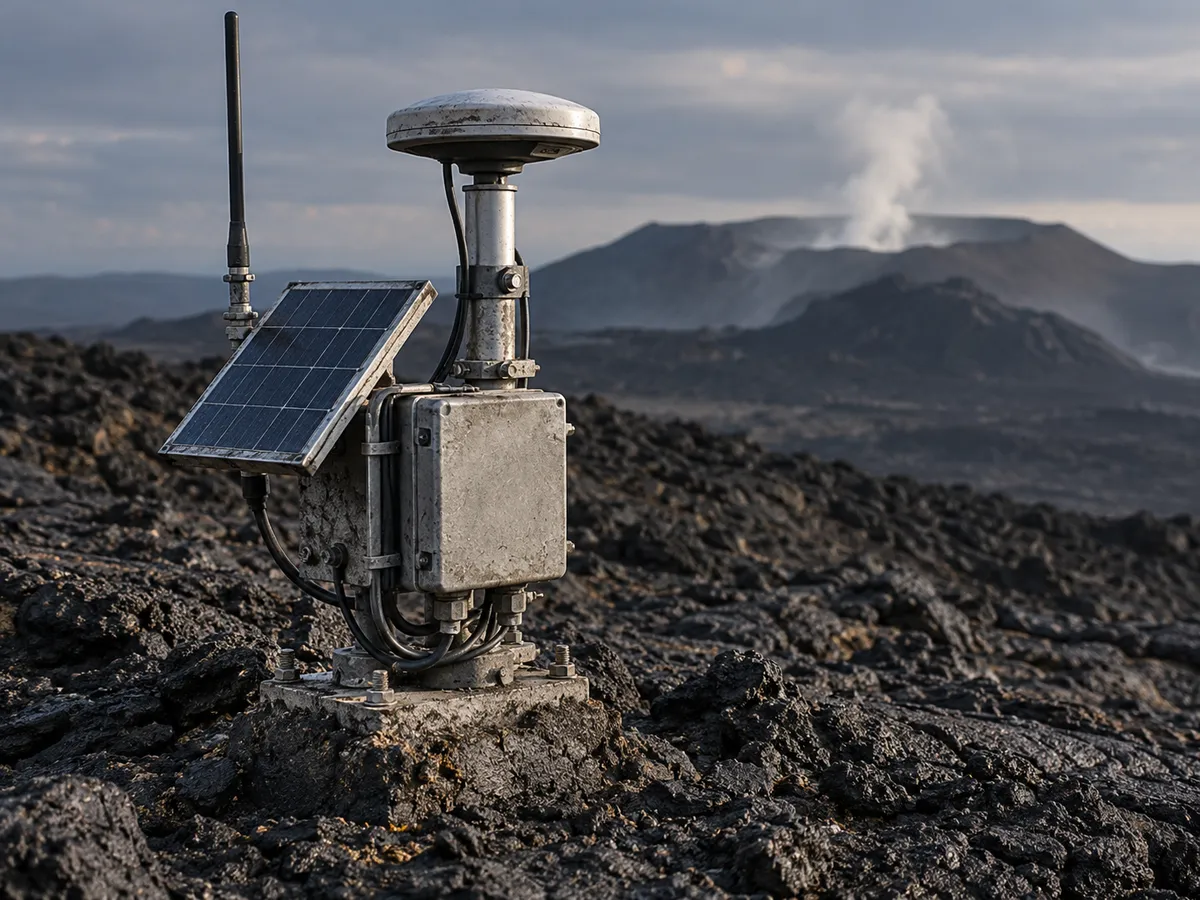
The USGS has a vivid comparison for how fine tiltmeters are. One microradian corresponds to the change in slope produced by a quarter placed under one end of a rigid board about 1.6 kilometres long.
From the way the episodes repeat, scientists estimate roughly when the next one will come. For episode 56, the USGS provisionally gave a range from 29 October to 5 November on 23 October. Because the run-up to episode 55 differed from earlier ones, it warns that it is not certain whether the inflation will remain regular and the forecast sufficiently accurate. Kilauea's rhythm can be followed, but nobody can determine the exact minute of the next fountain in advance.
04Curiosities
Volcanic glass hair and a four-hundred-metre fountain

Infographic
Fountain height in two episodes
Almost 200 million cubic metres of lava flowed out in the first year of the eruption. That is more than double what the Puʻuʻōʻō cone produced in an average year during its eruption from 1983 to 2018.
05Visiting
The fountains are in a closed part of the park
The eruption that began in December 2024 is taking place in a closed area of Hawaii Volcanoes National Park, and the caldera rim around Halemaumau has been closed to the public since the end of 2007. People watch the fountains from viewpoints, during episode 54 for example from the viewpoint at Uēkahuna.
Between episodes the volcano usually emits 1,000 to 5,000 tonnes of sulphur dioxide a day. In the atmosphere it turns into vog, volcanic air pollution that spreads downwind from the vents. In high concentrations, both sulphur dioxide and vog can cause breathing and other problems.
Residents and visitors should avoid tiny volcanic fragments, which can irritate the skin, eyes and airways. During the eruption in June 2023, the park service advised staying on marked trails and viewpoints and not entering closed areas. Before you travel, it is worth checking current conditions with the park service.
Sources10 sources · every number and claim in the article comes from them
- USGS Hawaiian Volcano Observatory
- USGS Hawaiian Volcano Observatory
- Honolulu Star-Advertiser
- USGS Hawaiian Volcano Observatory (Volcano Watch)
- USGS Hawaiian Volcano Observatory
- USGS Hawaiian Volcano Observatory (Volcano Watch)
- USGS Hawaiian Volcano Observatory (Volcano Watch)
- USGS Hawaiian Volcano Observatory (Volcano Watch)
- USGS Hawaiian Volcano Observatory
- National Park Service, Hawaii Volcanoes National Park