
In numbers
12.6°C
Temperature on Lysá hora (a mountain in the Moravian-Silesian Beskids) on 28 December 2024, a record for a station with a series of at least thirty years according to ČT24 (Czech Television's news channel)
over166µg/m³
Twelve-hour average of dust particles in Rychvald in the Karviná area during the smog on 27 December 2024
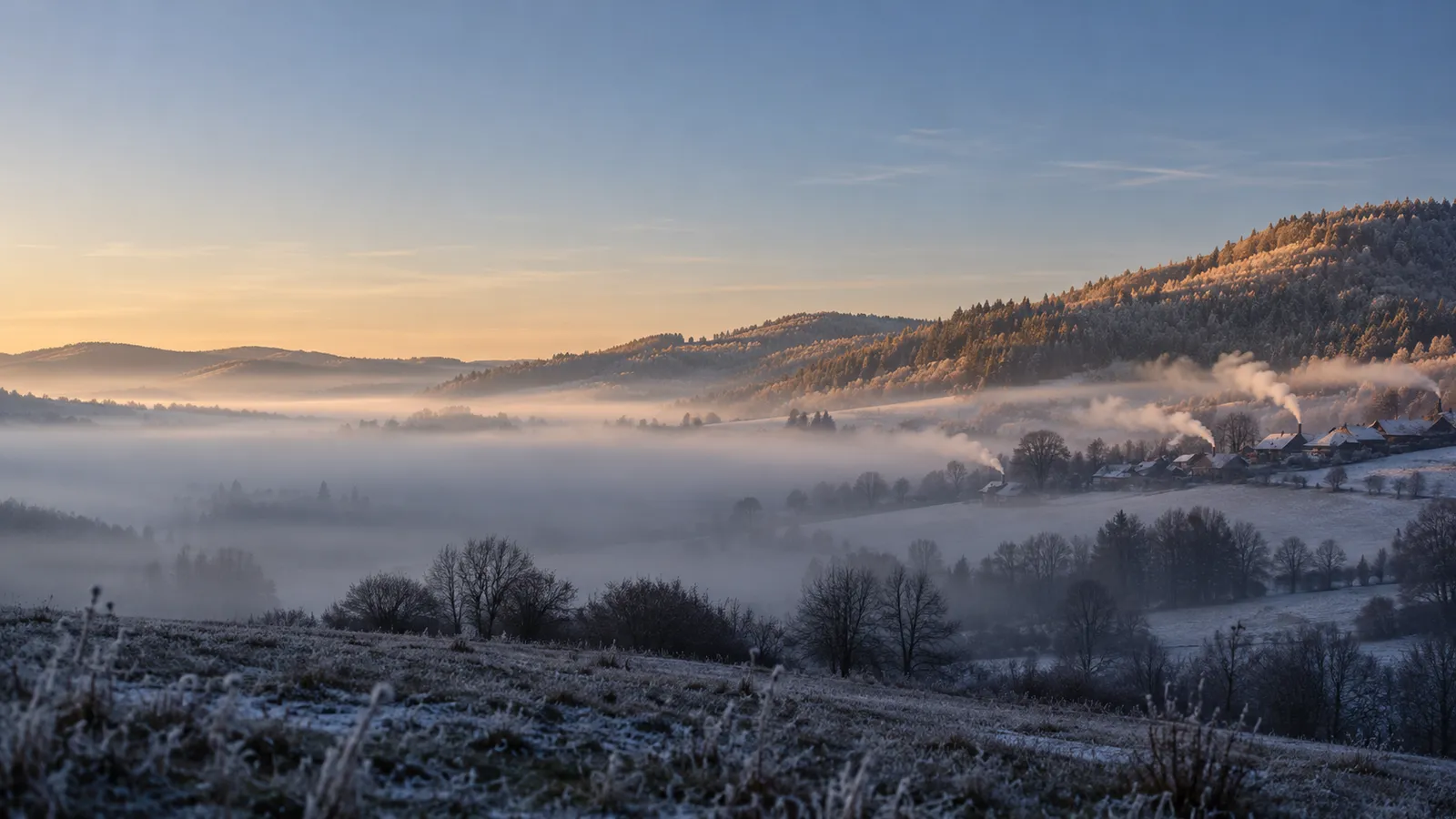
Smog during an inversion forms because cold, heavy air stays near the ground under a layer of warmer air, and smoke from chimneys, cars and factories has nowhere to rise. Pollution then builds up in valleys and basins. But not every inversion brings smog.
The end of 2024 showed how big a difference an inversion can make. On Saturday 28 December the northern half of Bohemia lay in freezing fog, while temperature records were being broken in places in the mountains.
According to ČT24 (the Czech Television news channel), a record fell on Lysá hora in the Beskydy, a mountain range in the east of the Czech Republic, where it reached 12.6 °C. Just a little lower down, in the Karvinsko area, a smog warning had applied the day before, and the worst reading came in Rychvald, where the twelve-hour average of particulate matter exceeded 166 µg/m³. Record warmth above, smog below.
01Inversion
The same chimney does not make smog every day
In usual weather the temperature falls with height. Air near the ground is the warmest, rises and carries smoke higher, where the wind thins it out. In a temperature inversion it is the other way round and the temperature rises with height.
Cold air is heavier than warm air, so it stays low. The inversion at its upper boundary then blocks the mixing of air and the supply of heat from higher layers.

Under an inversion, moisture is trapped together with everything people release into the air, the products of combustion from industry, heating and traffic. So smog depends not only on how much is burned, but also on whether the smoke can get away.
An inversion can persist even during the day, until wind or strong sunshine breaks it up. From November to February, however, the sunshine is relatively weak.
02Mountains and valleys
Sun and warmth above, smoke and frost below
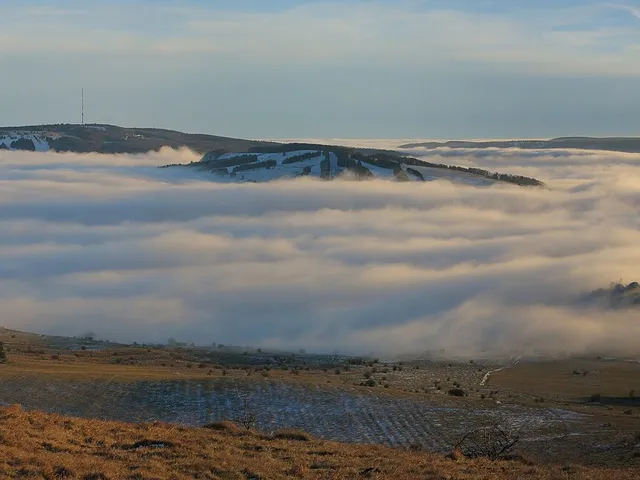
On the very same inversion day the mountain tops can be sunny, fairly warm by day and offer excellent visibility, while beneath them lies a layer of fog and cloud. Anyone who climbs above it finds themselves in different weather from people in the valley just below.

03Origin
Chimneys, cars and factories all end up under the same lid
Smog during an inversion does not come from a single source. Under the inversion, combustion products from heating and industry stay trapped. In the Moravian-Silesian Region, ČT24 reported that in December 2024 car emissions also contributed significantly to the raised dust levels.
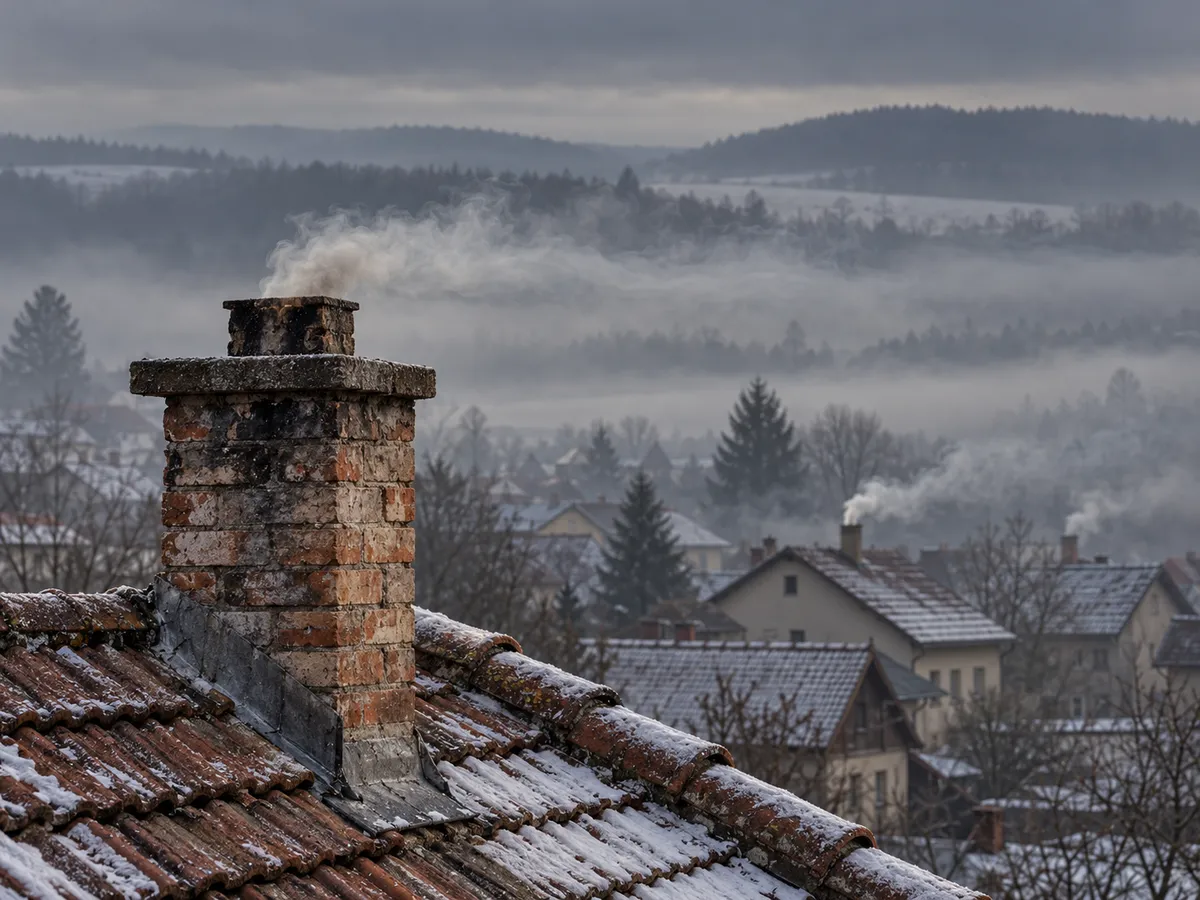
In the '80s and '90s, before the desulphurisation of coal-fired power stations, the Czech Republic suffered mainly from sulphur dioxide. Today the biggest problem is particulate matter, and in some places nitrogen oxides from combustion engines.
04Thresholds
Smog thresholds and what to do on smog days
A smog situation and regulation are declared by ČHMÚ within the smog warning and regulation system, which monitors PM10, sulphur dioxide, nitrogen dioxide and ground-level ozone. For PM10, SO2 and NO2 the threshold must be exceeded at no fewer than half of the representative stations, and the outlook for the following 24 hours is assessed.
Since then the rules of the system have been changed by an amendment to Act No. 201/2012 Coll. on air protection, in force from 1 March 2025, so the current wording is available from the ČHMÚ (the Czech Hydrometeorological Institute).
Advice for days of poor air quality
- 01
Less exertion outdoors
When dispersion conditions are poor, meteorologists recommend limiting physical exertion outdoors.
- 02
Ventilate only briefly
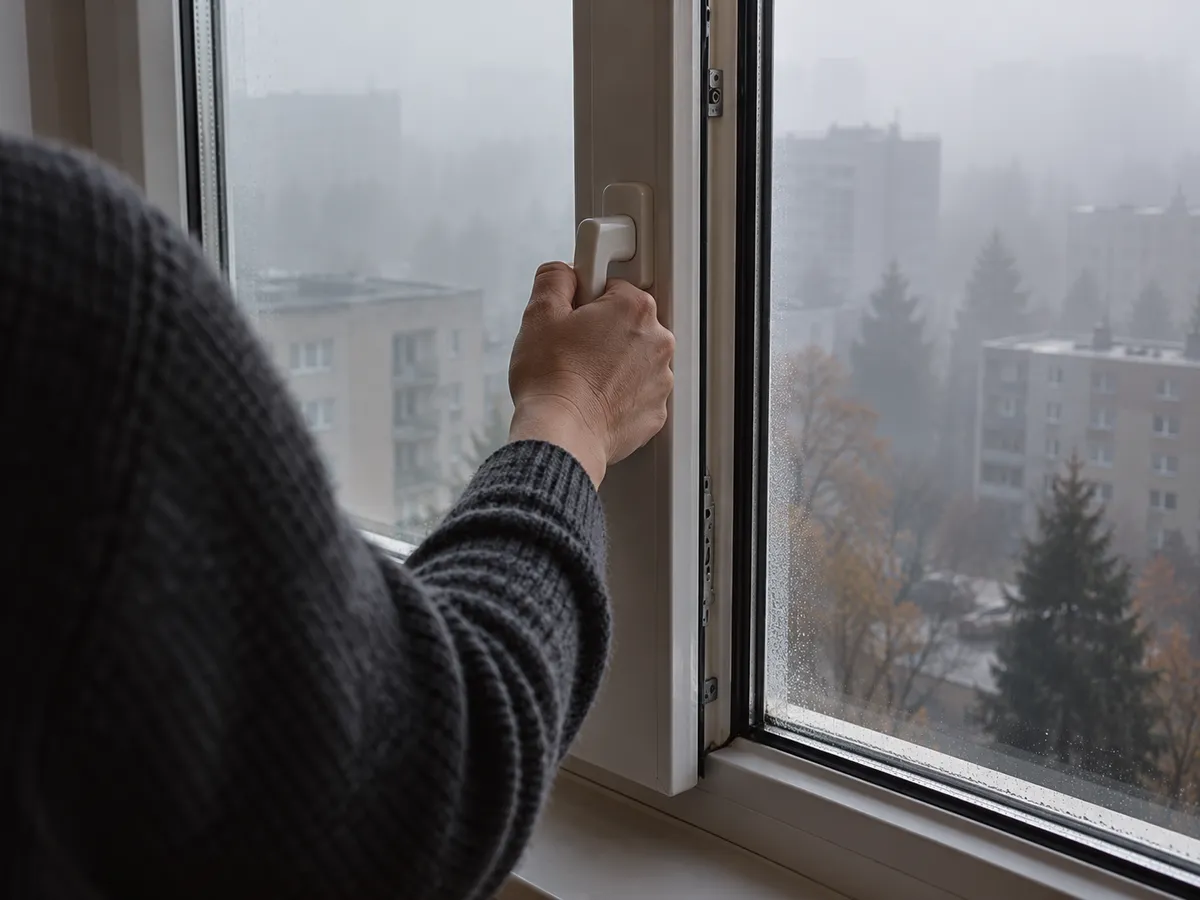
Open windows only briefly for as long as dispersion conditions remain poor.
- 03
Think twice about every journey
For the Moravian-Silesian Region, the advice in December 2024 was to consider whether every journey was necessary, because cars contributed significantly to the dust.
- 04
Follow the public health institute's advice
The Czech Hydrometeorological Institute (ČHMÚ) refers people to the guidance of the National Institute of Public Health (Státní zdravotní ústav, SZÚ) on how to behave during a smog situation.
How to air a room briefly when it is cold outside is covered in our article on airing rooms in winter. When it makes sense to start heating, and why 13 °C matters more than the calendar, is covered in our article on when to start heating.
05Checking
An estimate for your place and ČHMÚ measurements
The hourly values for fine particles and other substances that you find here are an estimate from the CAMS model, not a measurement and not a declaration of a smog situation. The model draws on a set of eleven European forecasting systems and has a resolution of roughly 10 km.
At a resolution of around 10 km, the model can hardly capture a narrow valley or a single street, so the real situation where you are may differ from the estimate. CAMS (the Copernicus Atmosphere Monitoring Service, the European air quality forecasting service) regularly checks its forecasts of PM2.5, PM10, nitrogen oxides, sulphur dioxide and ozone against measurements at stations. It labels its estimates for other substances as experimental.
Measurements from stations and the official declaration of a smog situation belong to ČHMÚ, which also publishes an overview of the situations and regulations declared so far. The model estimate serves as a guide, and the measured data have the final say.
On the Kvalita ovzduší a UV (air quality and UV) page of Fakt počasí you will find the model estimate of fine particles and other substances for your place, hour by hour. You will see whether the model expects cleaner or poorer air in the next few hours.
Sources6 sources · specific figures come from the sources, the general explanation from expert knowledge
- ČT24 (text meteorologa Michala Žáka, s grafem ČHMÚ) (text by the meteorologist Michal Žák, with a ČHMÚ graph) (in Czech)
- ČT24 / ČTK (citace ČHMÚ) (ČT24 is the news channel of Czech Television and ČTK the Czech News Agency, quoting ČHMÚ) (in Czech)
- ČT24 (zdroj ČHMÚ, ČTK) (source ČHMÚ and the Czech News Agency ČTK) (in Czech)
- ČHMÚ (Czech Hydrometeorological Institute, smog warning and regulation system) (in Czech)
- ČHMÚ (Czech Hydrometeorological Institute, history of declared smog situations) (in Czech)
- Copernicus Atmosphere Data Store (CAMS)