

In numbers
−6cm
Kaub gauge reading on 1 October 2026, not the depth of the river
800t
Average cargo load in late July, normally about 5.1 thousand tonnes
150€/t
Rate from Rotterdam to destinations south of Kaub in early August
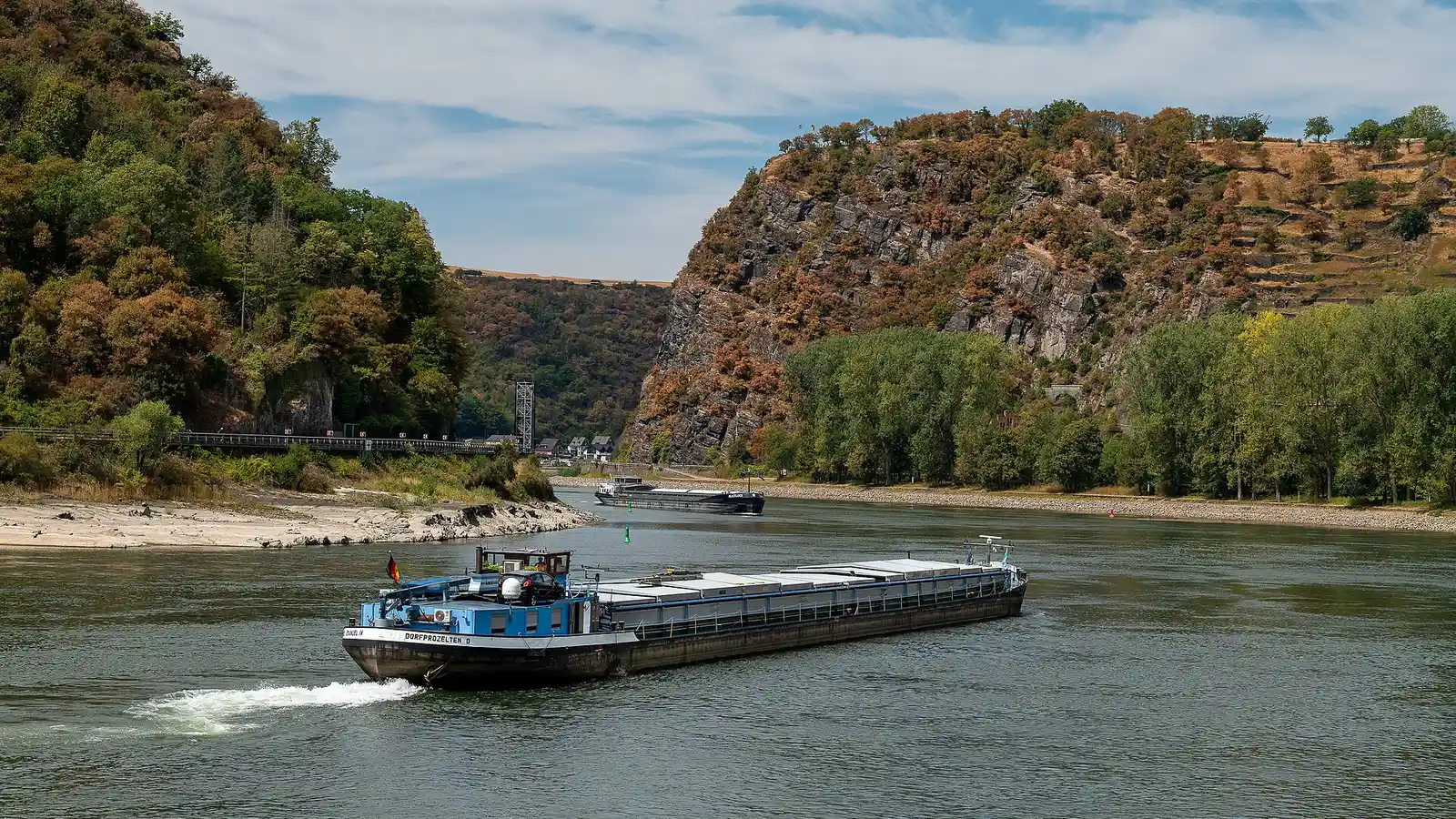
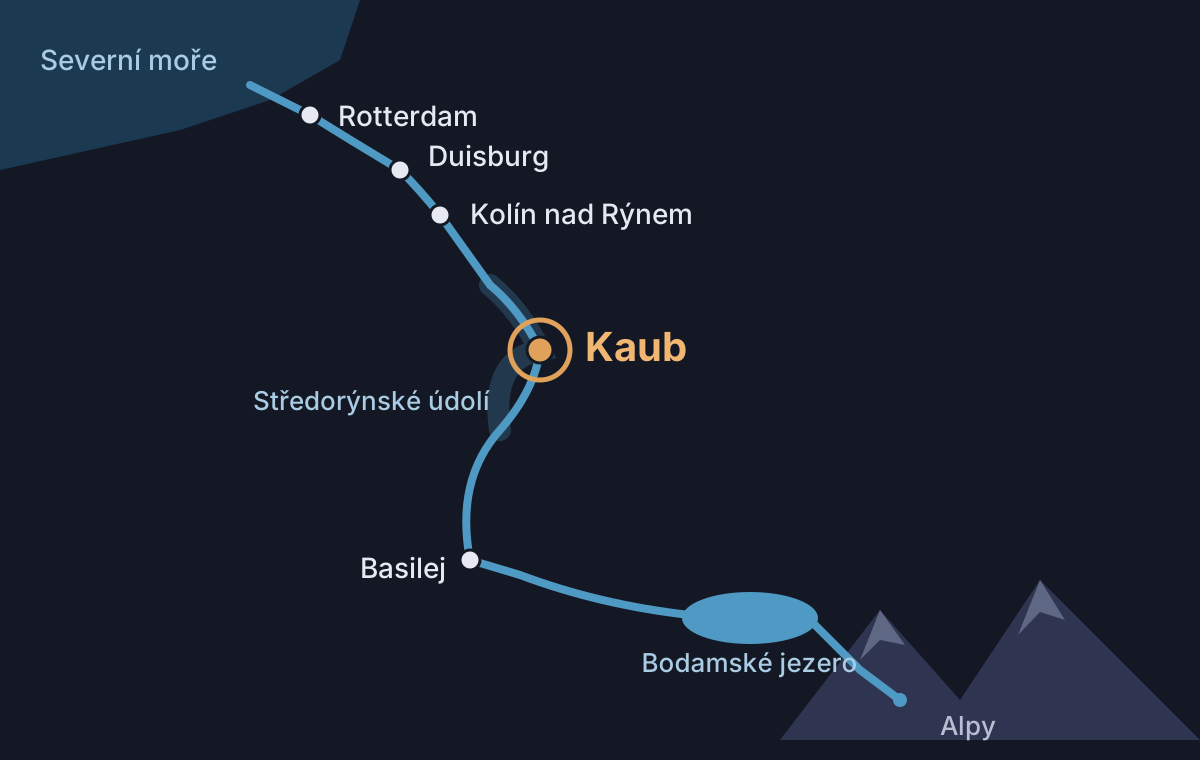
Kaub is a crucial bottleneck on the Middle Rhine. When its gauge fell to minus 6 centimetres on 1 October, this meant exceptionally low water, rather than a river that had dried up. Ships had been carrying only a fraction of their usual cargo since late July, and freight costs had soared.
01The gauge
Below zero does not mean an empty river
The gauge at Kaub does not measure the river's depth. It shows the water level relative to the station's own zero point, so a negative reading does not mean an empty riverbed. The shipping channel remains deeper than the reading on the scale.
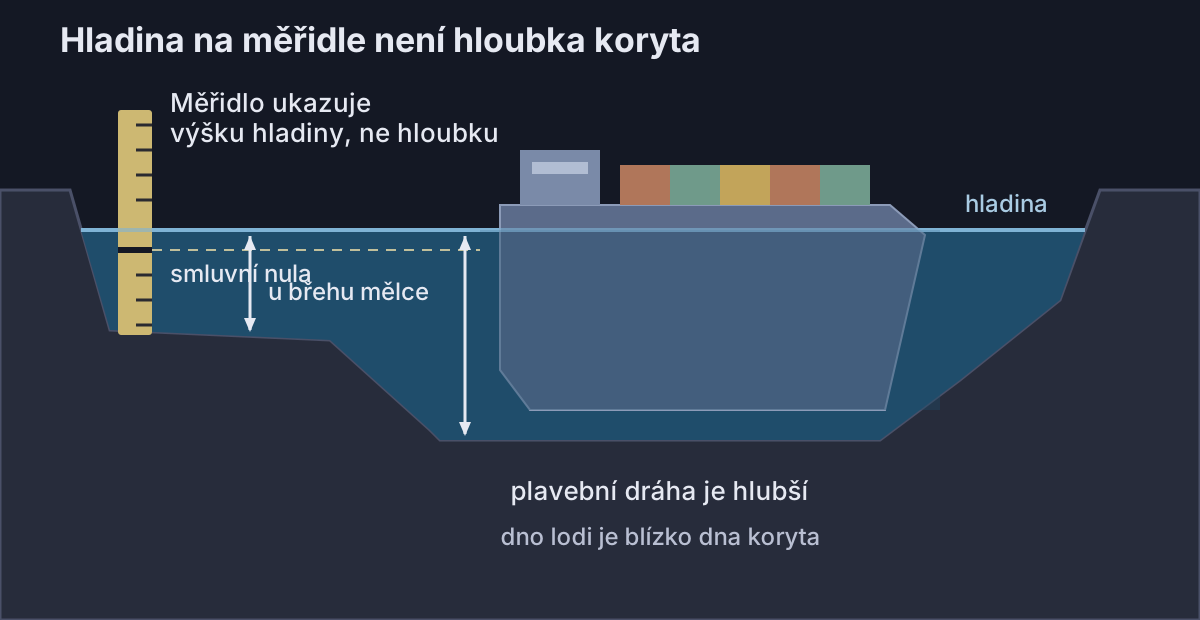
Readings from different stations cannot be compared directly either, as each has its own zero point. A lower reading at Düsseldorf than at Kaub therefore does not, by itself, tell us where the river is shallower.
An official measurement recorded minus 6 centimetres at Kaub on 1 October. Wetter.net described this as the lowest level since records began and noted the previous record of 25 centimetres in 2018.
02How it unfolded
Two spells of drought on the Rhine
The Rhine did not fall steadily. In August, the reading at Kaub dropped to around 5 centimetres, before rain arrived and the water level rose to about 72 centimetres on 31 August. Ships could load more cargo, but still could not carry a full load.
The respite lasted only a few weeks, and water levels fell again in September. The navigation authority in Bingen said at the time that the Rhine was being fed only by wastewater treatment plants, melting glacier ice and a little groundwater.
03Cargo
Cargo stayed ashore
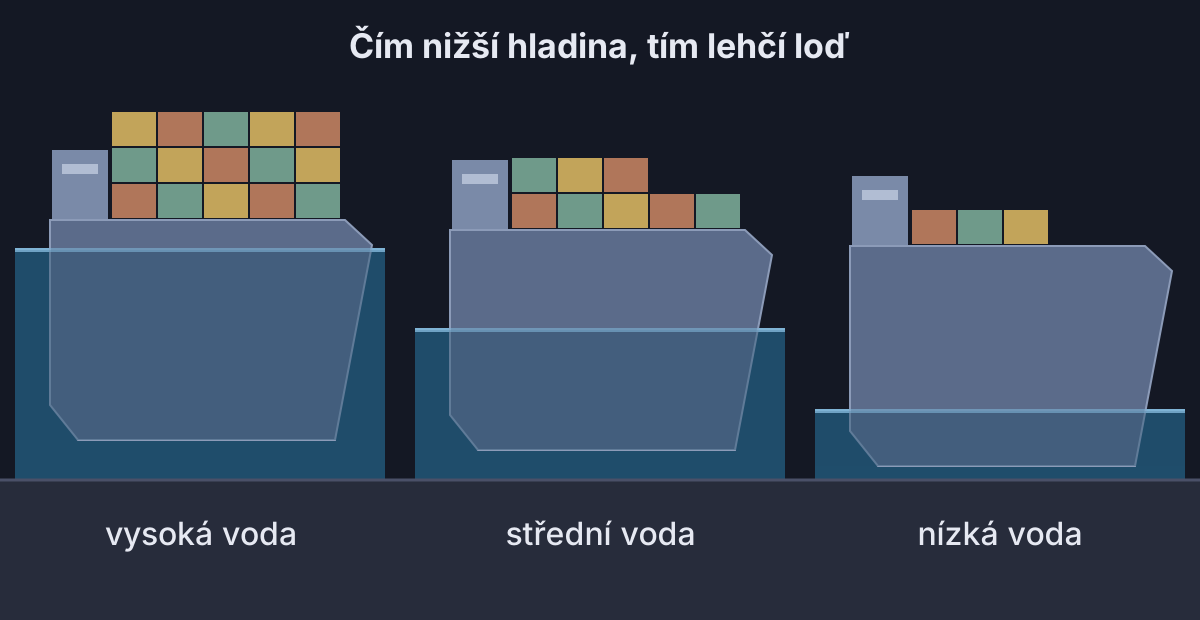
Kaub is a crucial bottleneck for shipping because the water level determines a vessel's safe draught and cargo load. A report from late August put the gauge reading normally needed for a full load at about 1.5 metres.
In late July, the average ship carried about 800 tonnes instead of the usual 5.1 thousand. When shipping resumed after the August rain, vessels passed through Kaub carrying 700 to 800 tonnes, depending on the type of vessel.
In late September, an economist at the IW economic research institute described the Rhine as effectively split, mentioning only a few specialist vessels able to navigate the restricted stretch. Conditions at Kaub thus determined how much cargo could pass through the Middle Rhine at all.
04Cost
How low water pushed up freight costs
- When: normal conditions
Route: Rotterdam to destinations south of Kaub
Rate per tonne: about 20 euros - When: early August 2026
Route: Rotterdam to destinations south of Kaub
Rate per tonne: nearly 150 euros - When: mid-August 2026
Route: Amsterdam, Rotterdam and Antwerp to Karlsruhe
Rate per tonne: 215 euros
On 4 October, Wetter.net reported that the shipping company MSC had declared force majeure and was seeking a surcharge of 1 350 euros for every twenty-foot container that had to pass through Kaub.

It can take more than a hundred lorries to replace a single river vessel. The chemical group BASF in Ludwigshafen receives roughly half its raw materials by river, while Switzerland receives about 30 per cent of its mineral oils this way.
05Discoveries
What the low water revealed
When water levels fall very low, hunger stones bearing the dates of dry years emerge. In August, a stone weighing at least fifty kilograms was recovered from the Rhine near Leverkusen. It bore the date 3. 8. 1973, the letters E and H and the newly added year 2026.
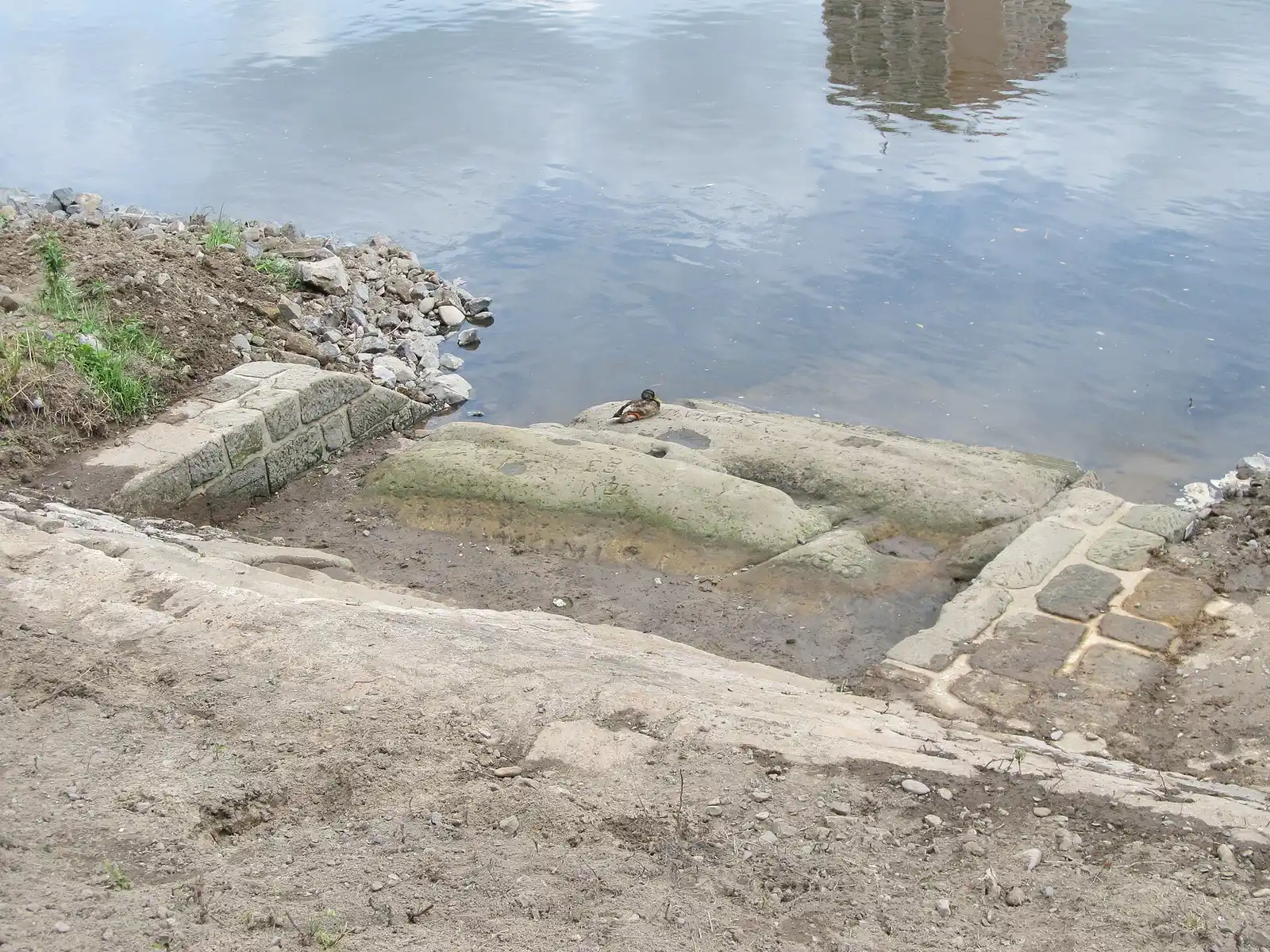

This year, Povodí Labe, the river basin authority, had the hunger stones near Děčín in Czechia identified again and cleaned. One bears the years 1934 and 1947 and the name F. Schade. Workers counted fifteen stones near Hřensko. The water level at Děčín is kept above 115 centimetres by the Vltavská kaskáda, a chain of reservoirs on the Vltava river.
Low water also closed Pfalzgrafenstein castle, which stands on a small island near Kaub. The operator says the castle can be reached only by passenger ferry from Kaub, and that it remained closed because of low water on 2 September.


06Europe
Low water affected other rivers too
According to Copernicus, the Rhine, Danube and Vistula recorded their lowest seasonal flows in summer 2026 in its data going back to 1992. Record low September flows also affected parts of the Garonne and Dordogne. In late July, the Danube at Pfelling fell to 216 centimetres, below its 2022 low.
07Outlook
When will water return to the Rhine?
At 18.00 on Monday 19 October, the Kaub gauge read 16 centimetres. An outlook issued that day expected a series of autumn storms bringing rain from Friday 23 October, offering ships a brief respite rather than a turnaround.
The BDB inland shipping association estimated that a substantial rise would require two weeks of continuous rain, particularly in south-western Germany. A return to normal conditions would require a wet winter and snow in the Alps.
Sources19 sources · specific figures come from the sources, the general explanation from expert knowledge
- WSV PEGELONLINE, Kaub W (cm)
- Logistik Heute (dpa), 30. 9. 2026 (30 September 2026)
- EnterpriseAM (cituje Bloomberg), 3. 8. 2026 (Citing Bloomberg, 3 August 2026)
- Welterbe Mittelrheintal, Kauber Pegel
- Brussels Times (Belga), 25. 9. 2026 (25 September 2026)
- Wetter.net, 4. října 2026 (4 October 2026)
- Reuters přes gCaptain, 24. 8. 2026 (Reuters via gCaptain, 24 August 2026)
- WirtschaftsWoche, 31. srpna 2026 (31 August 2026)
- Argus Media, 13. 8. 2026 (13 August 2026)
- dpa přes Volksstimme, 25. 8. 2026 (dpa via Volksstimme, 25 August 2026)
- Euroregion Elbe/Labe, 14. 8. 2026 (14 August 2026)
- Provozovatel hradu Pfalzgrafenstein (Pfalzgrafenstein castle operator)
- Welterbe Mittelrheintal, Pfalzgrafenstein
- Bloomberg přes swissinfo.ch, 24. 9. 2026 (Bloomberg via swissinfo.ch, 24 September 2026)
- Copernicus Climate Change Service, srpen 2026 (August 2026)
- Copernicus Climate Change Service, září 2026 (September 2026)
- t-online, 31. 7. 2026 (31 July 2026)
- WSV PEGELONLINE, Kaub W (cm)
- Wetter.net, 19. října 2026 (19 October 2026)