
In numbers
over10billion years
How long the signal of the burst travelled through space to Earth
2.148
Redshift of the burst's home galaxy, confirmed by Webb
1000krát
How many times lighter the home galaxy is than astronomers expected
about30million years
In so short a time most of the galaxy's stars may have formed
The James Webb Space Telescope has found the home galaxy of the fast radio burst FRB 20240304B, the most distant one astronomers have detected so far. The burst was emitted when the universe was about three billion years old, and it beat the previous distance record by more than double.
01What it is
What a fast radio burst is
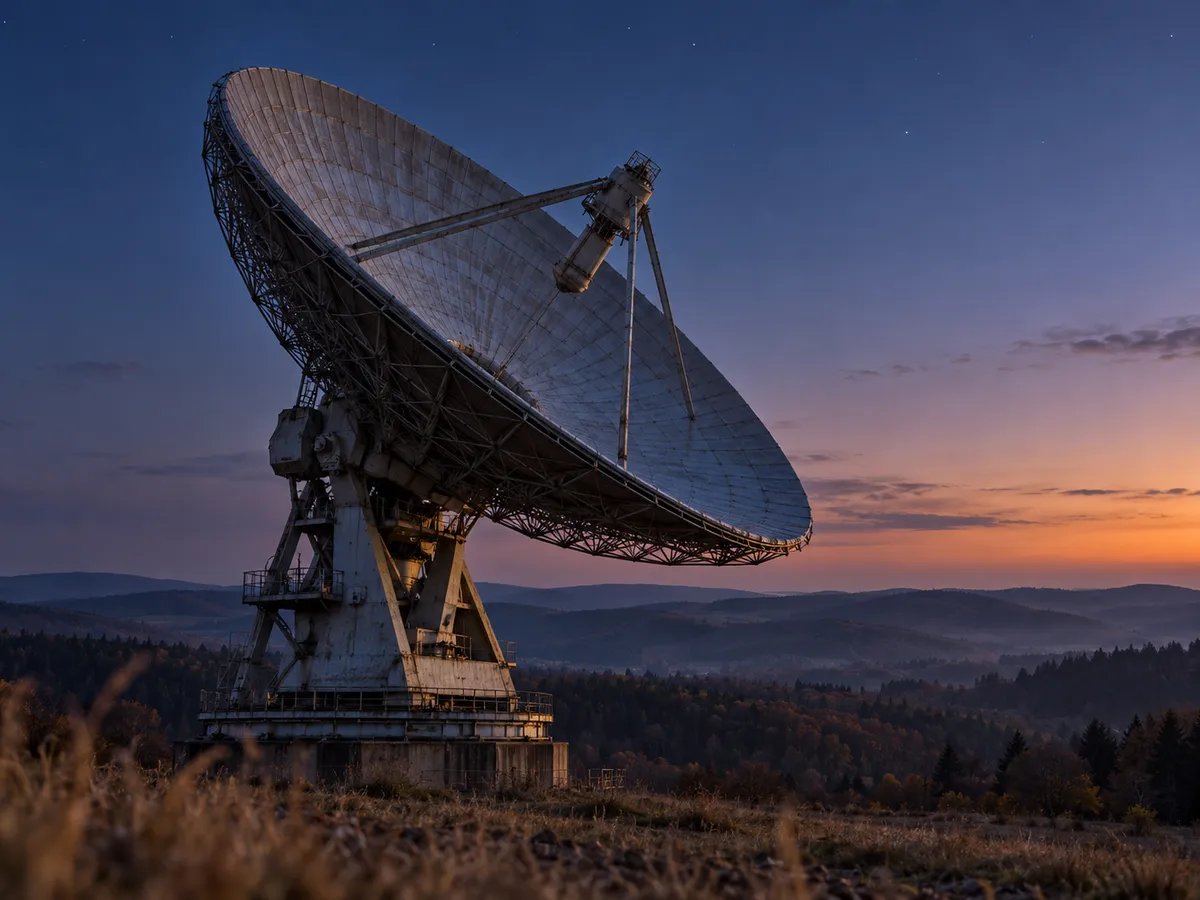
Fast radio bursts are short pulses of radio waves from deep space. They last only thousandths of a second, yet they release an enormous amount of energy. This burst lasted just a few milliseconds and gave off more energy than the Sun does in a year. Astronomers first discovered such bursts in 2007, and their origin remains uncertain to this day.

02Searching for a home
How to find the home of a burst that lasts a moment
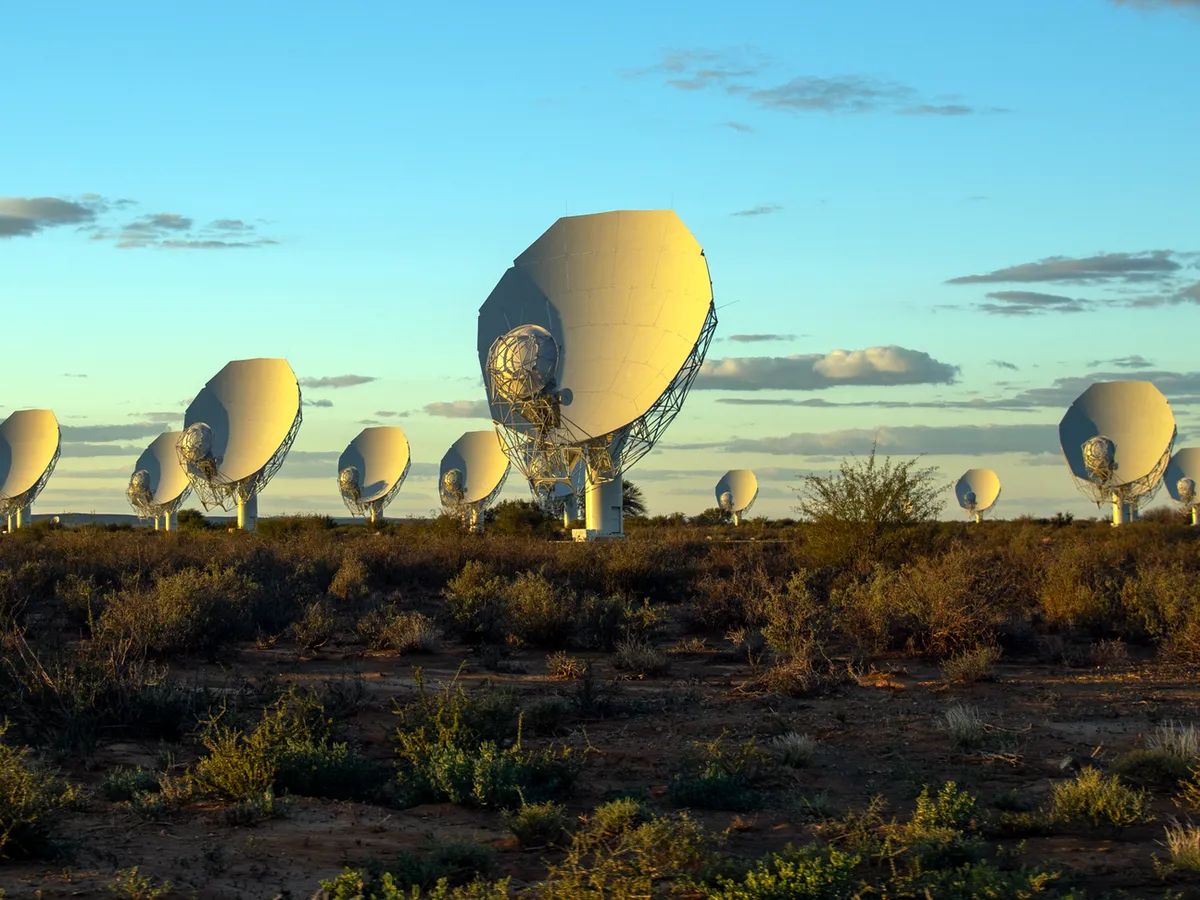
The MeerTRAP team caught the burst with the MeerKAT telescope on 4 March 2024. A radio telescope, however, shows only the direction the signal came from. Astronomers knew the position very precisely, yet the largest ground-based telescopes saw no galaxy there.

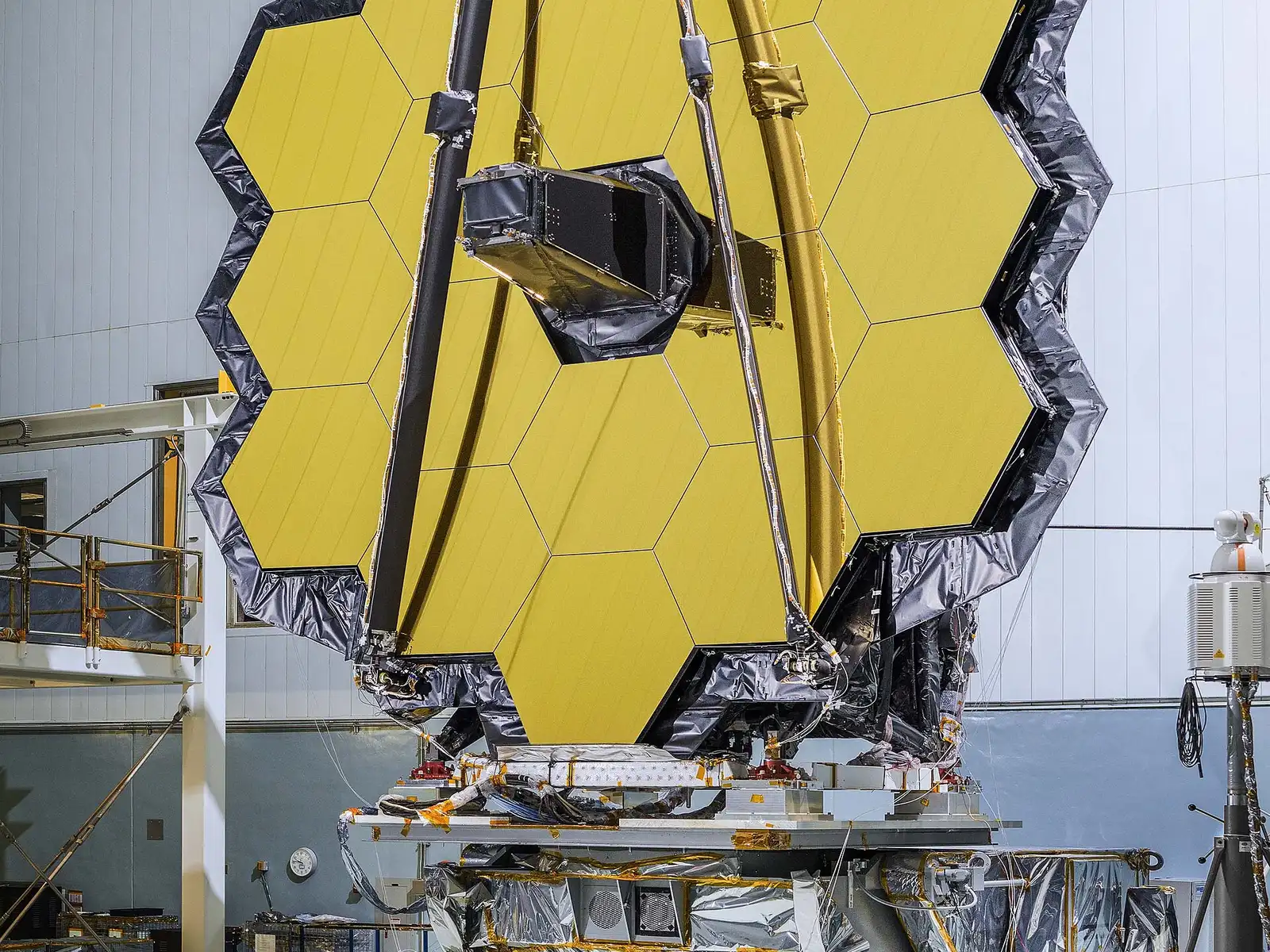
Neither archive images nor deeper observations with the Keck and MMT telescopes showed any galaxy at that spot. Only Webb saw it, in infrared light. Its NIRCam camera found a dwarf galaxy of magnitude 28 at the position of the burst, and Webb confirmed a redshift of 2.148 for it.

03The host galaxy
A small galaxy from the time when the universe was forming the most stars
The previous record belonged to a burst whose discovery in 2023 also involved astronomers from the University of Sydney. The signal of the new burst travelled through space to Earth for more than 10 billion years.

The home galaxy is surprisingly small, poor in metals and going through a very active period of star formation. It existed at cosmic noon, when star formation in the universe was at its peak. According to the authors of the study, it is about a thousand times less massive than is expected for the hosts of known bursts, and about 90 % of its stellar mass may have formed over the previous 30 million years.
04Torch
A burst as a torch for the invisible
Astronomers compare a radio burst to a cosmic torch that lights up everything on its way. It carries the imprint of everything it passed through, and from it one can trace the otherwise invisible matter of the cosmic web.
Free electrons along the path of the burst delay waves of different frequencies by different amounts, so they do not arrive all at once. This is called dispersion, and from it one can measure how many free electrons lay between the source and Earth.
On its way, the signal of FRB 20240304B passed through a previously unknown galaxy cluster at a redshift of 0.3, about 3.5 billion light years from us, and it also carried the imprint of the nearby Virgo Cluster, about 54 million light years away. The burst thus makes it possible to study structures that are hard to observe directly.

05Question mark
What we still do not know about the source of the burst
Young magnetars, neutron stars with a strong magnetic field, are a candidate source. According to its authors, the new study provides fresh evidence that at least some bursts can come from such stars. Astronomers do not yet have conclusive proof, however.
One theory assumes a mechanism similar to a starquake on a young magnetic neutron star. Caleb considers a merger of neutron stars very unlikely for this burst. According to the team's estimate, MeerKAT could detect and localise several bursts a year with a redshift greater than 1.0, so similar cases may become more common.