
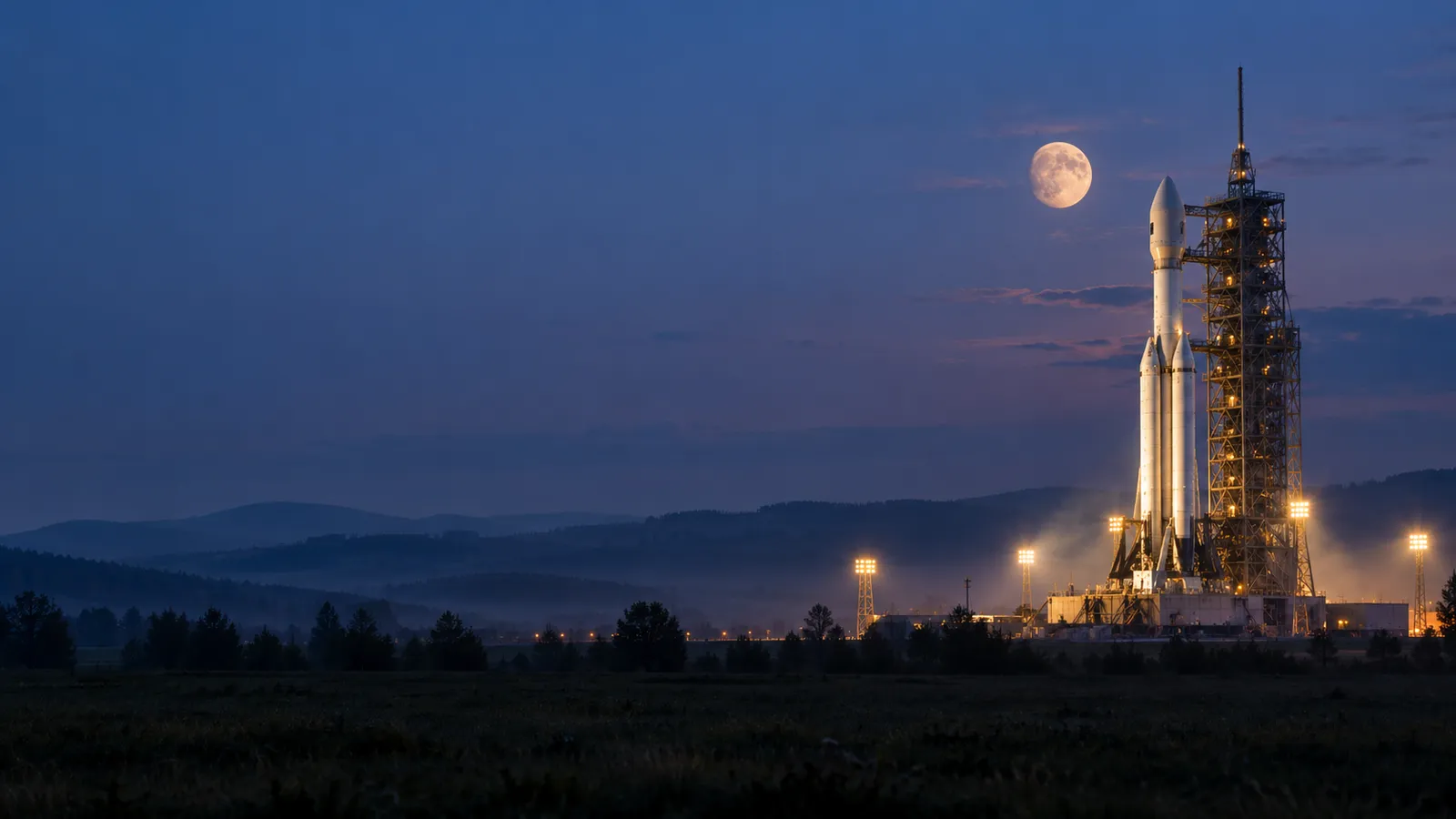
Artemis III will take four astronauts only as far as low Earth orbit in 2027. There, Orion will rendezvous and dock with test versions of the landers for the first time.
01THE PROGRAMME
Artemis is a programme, with companies supplying the landers
Artemis is neither a single rocket nor a single spacecraft. It is a NASA programme made up of numbered missions intended to take people back to the Moon and later to its surface near the south pole. It takes its name from the Greek goddess of the Moon and twin sister of Apollo.
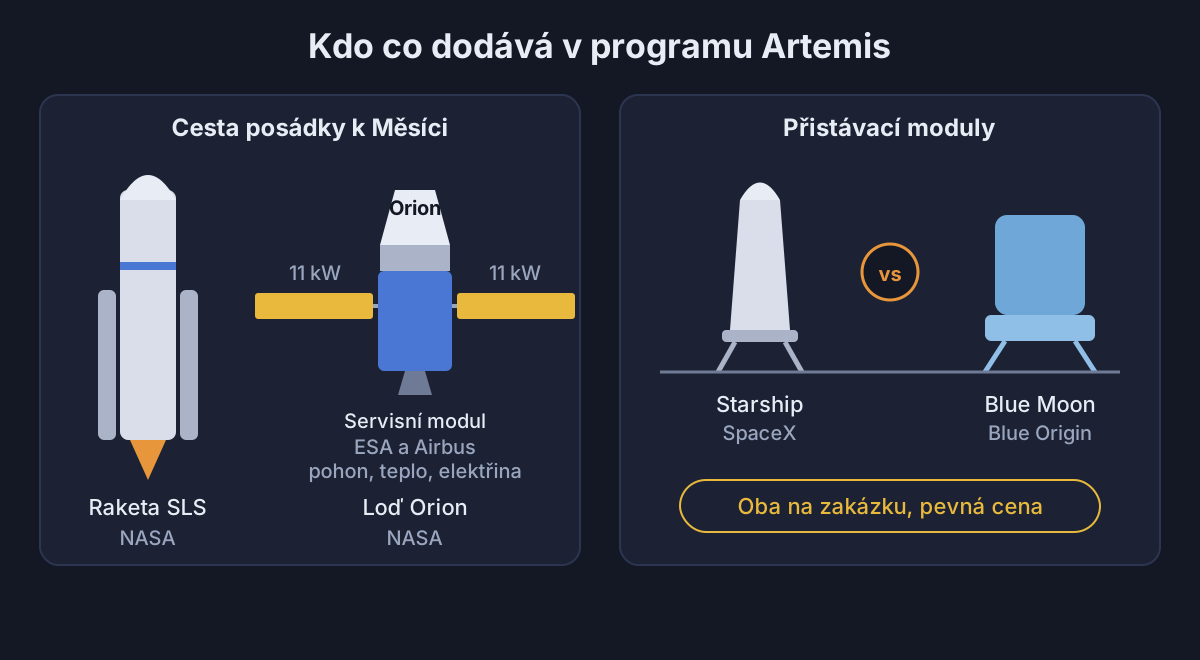
NASA does not build the landers itself. It commissions them from companies through fixed-price contracts, with the chosen suppliers designing, building and demonstrating their vehicles. SpaceX is developing a crewed lunar version of Starship, while Blue Origin is working on its Blue Moon lander.
NASA wants to buy lunar landing services that meet its requirements. Its contract with Blue Origin, awarded in May 2023, had a fixed price of 3.4 billion dollars. An extension to the SpaceX contract in November 2022 was worth about 1.15 billion dollars. The agency said a second supplier would increase competition and reduce costs for taxpayers.
NASA's Office of Inspector General said the agency had committed almost seven billion dollars to lander development since 2019. Development is expected to cost more than eighteen billion dollars through the 2030 fiscal year.
- Year: April 2026
Mission: Artemis II
Task: crewed flight around the Moon and backLunar landing: no - Year: 2027
Mission: Artemis III
Task: tests of Orion and the landers near EarthLunar landing: no - Year: 2028
Mission: Artemis IV
Task: first planned crewed mission to the south poleLunar landing: yes, as planned
02ARTEMIS II
Artemis II put Orion to the test with a crew
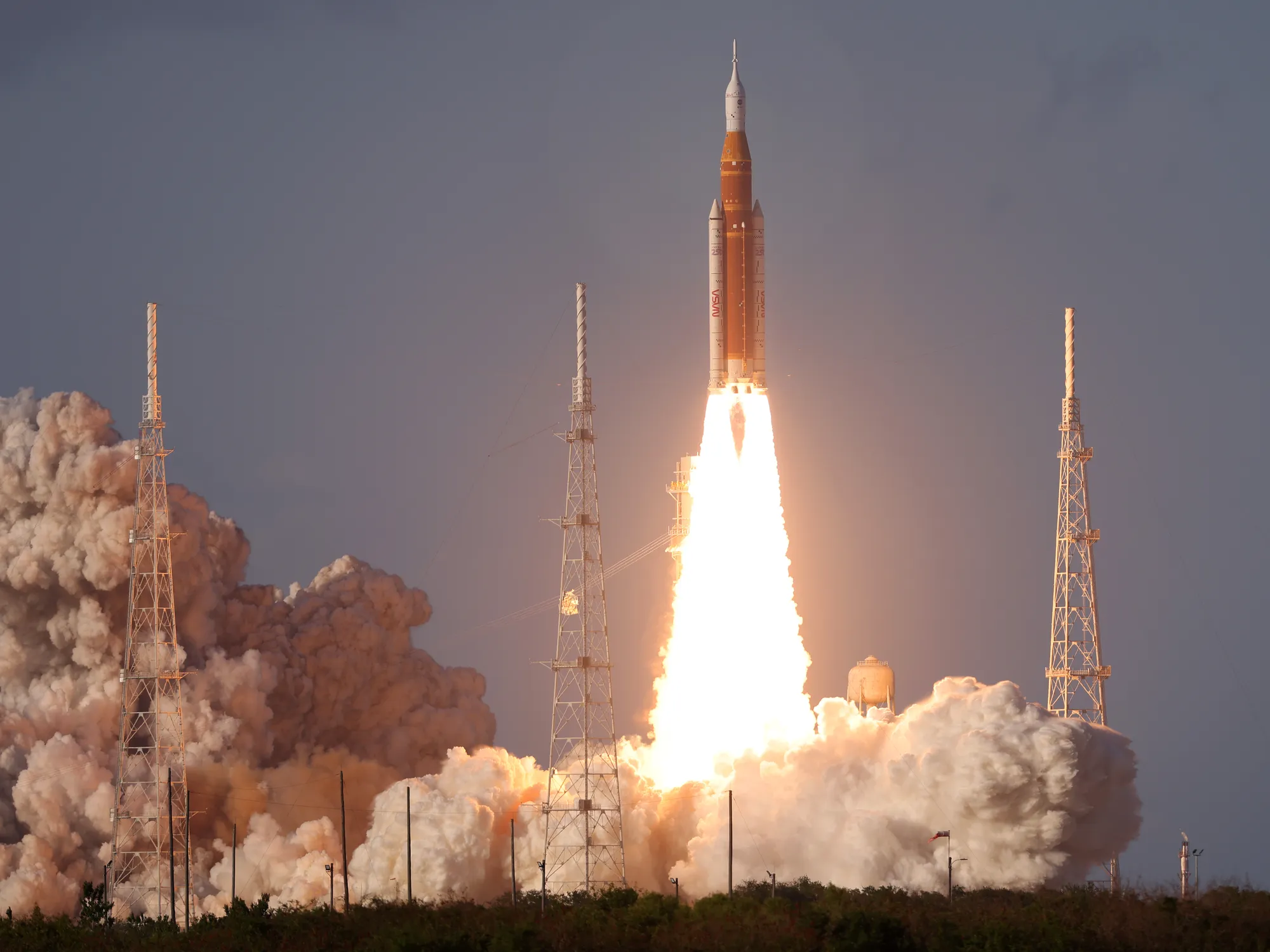
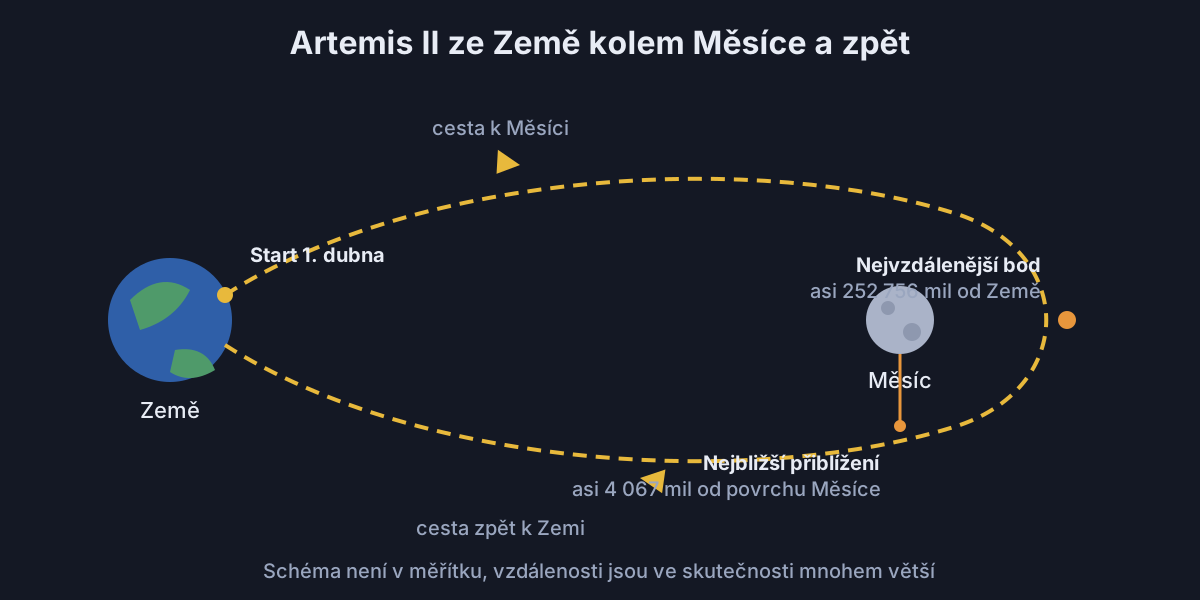
Artemis II launched on 1 April 2026 from Kennedy Space Center in Florida. Reid Wiseman, Victor Glover, Christina Koch and the Canadian Space Agency's Jeremy Hansen flew aboard Orion. The first crewed flight around the Moon in more than 50 years ended on 10 April with a splashdown off San Diego, about a kilometre from the expected location.
The flight was intended to show how Orion supports people travelling far from Earth. The crew tested life support, cabin air revitalisation, manual piloting and the operation of the spacecraft's equipment and software.
The heat shield was an important test. During Artemis I, gases forming inside the Avcoat material could not escape quickly enough, causing some of it to crack and break away. NASA therefore adjusted Orion's atmospheric entry trajectory for Artemis II.
The shield performed as expected during Artemis II. Engineers found nine areas where charred material had been lost, compared with 103 after Artemis I. Cracking and material loss fell by a factor of ten, and the cabin temperature stayed around 24 °C during re-entry.
03A CHANGE OF PLAN
NASA moved the first landing to Artemis IV
NASA announced the new plan on 27 February 2026, just over a month before Artemis II launched. It added another flight to the programme in 2027 and assigned Artemis III to tests in low Earth orbit. The first crewed landing is due to follow with Artemis IV in 2028.
The agency explains the change as a step-by-step build-up of capabilities. It does not want to expose the crew to unnecessary risk. NASA Deputy Administrator Amit Kshatriya also said that changing the configuration of the SLS rocket and the Orion spacecraft for later missions would be needlessly complicated.
04TESTING NEAR EARTH
Testing both landers in Earth orbit
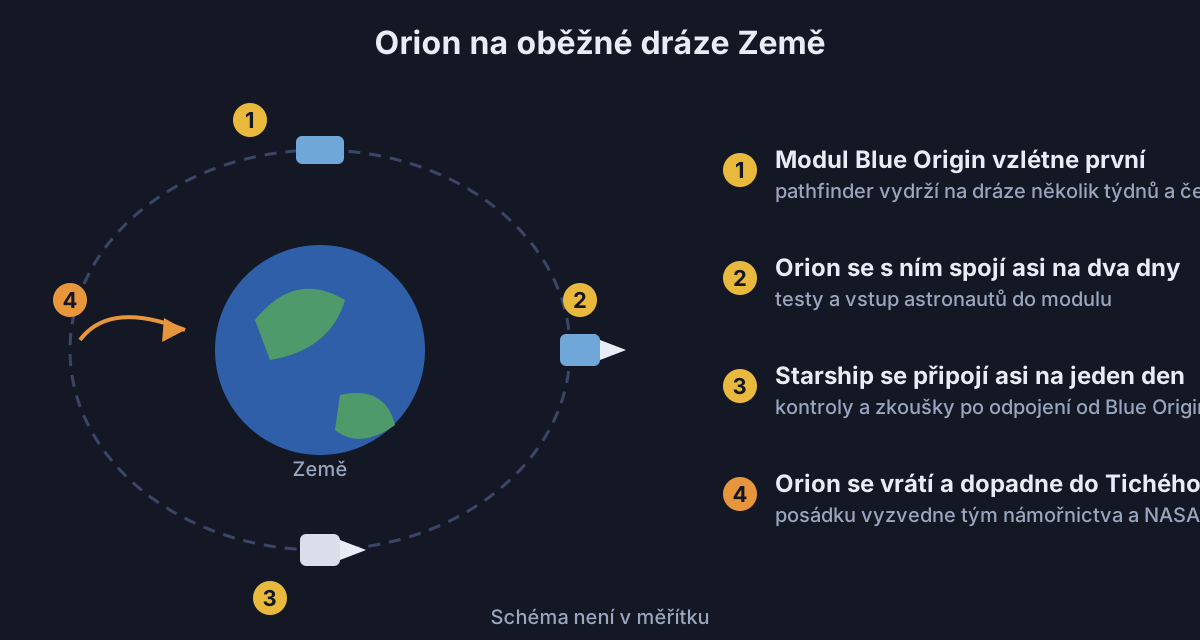
The SLS rocket will carry four astronauts aboard Orion into low Earth orbit. There, the spacecraft will rendezvous and dock with test versions of the Blue Origin and SpaceX landers for the first time. NASA says the mission could involve one or both landers.
Blue Origin's test lander is due to launch first, remaining in orbit for several weeks to await the crew. Orion will stay docked with it for about two days, and the astronauts will go inside. After undocking, Orion is due to wait for Starship and spend approximately one day docked with it.
The whole mission is expected to last approximately two weeks. The crew will test new spacesuits for work outside the spacecraft, along with the combined operation of the life-support, communications and propulsion systems. Orion will then return to the Pacific Ocean, where a NASA and US Navy team will recover the astronauts.
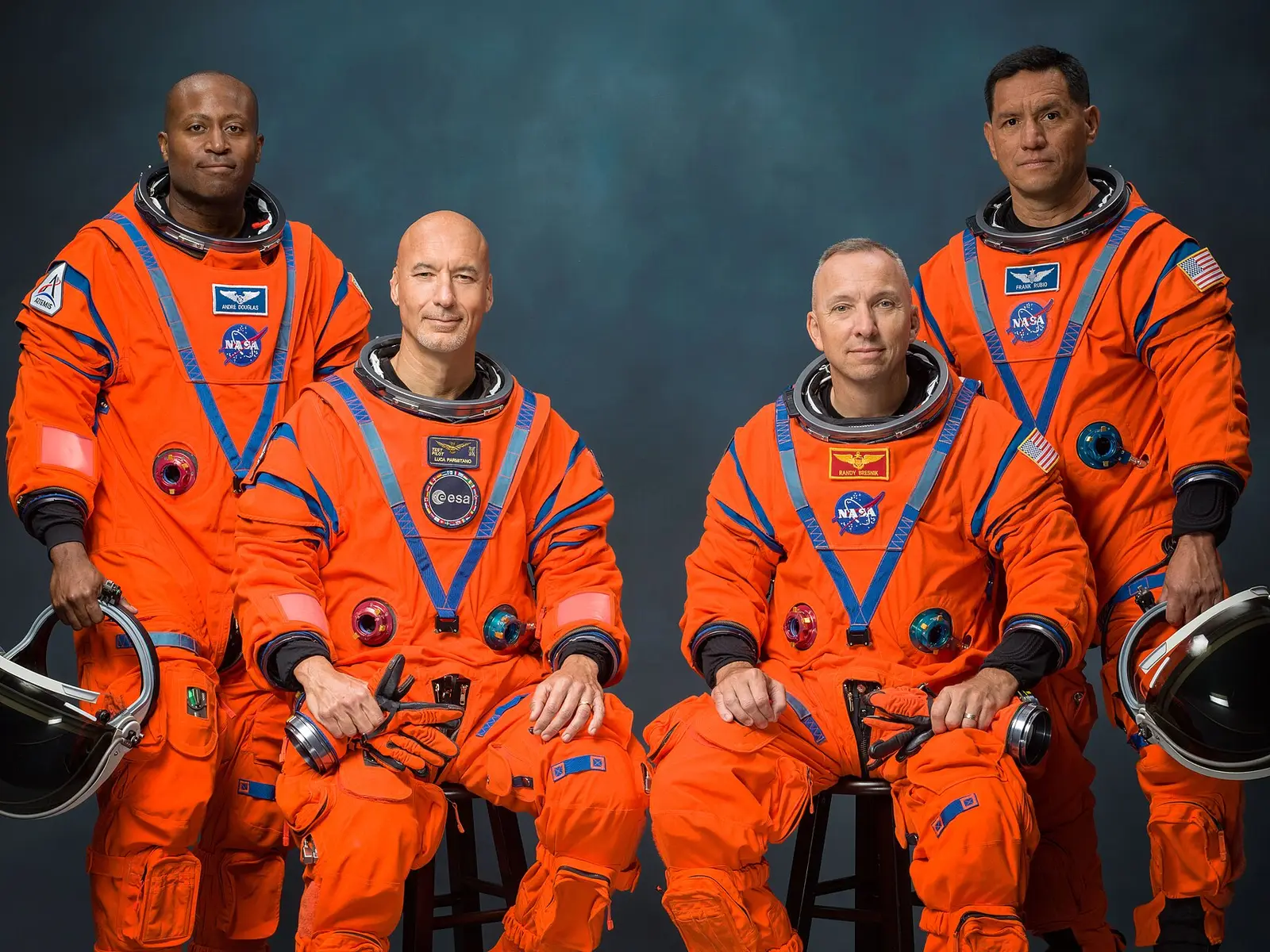
The crew consists of commander Randy Bresnik, pilot Luca Parmitano of the European Space Agency (ESA), and mission specialists Andre Douglas and Frank Rubio. Before the flight, they visited both SpaceX and Blue Origin to learn about the development of the two landers.

05STILL TO BE RESOLVED
Technical and safety risks remain before a landing
According to its Inspector General, NASA is accelerating development with both companies to meet the 2028 landing target. The suppliers have, however, faced delays, technical difficulties and integration problems. Meanwhile, the value of the SpaceX contract has risen by 6 per cent and the Blue Origin contract by less than 1 per cent.
The rest of the programme has problems too. The US Government Accountability Office (GAO) said that two Artemis projects had reported technical and programme problems that are likely to delay their schedules. Orion accounts for almost 75 per cent of the cumulative cost overrun of NASA's major projects.
System status ahead of the planned landing
The heat shield received modified blocks of Avcoat material with uniform permeability, and technicians attached it to Orion in early July.
Orion's docking system will fly under real conditions for the first time on Artemis III.
The crew will try the new xEVA spacesuits in space for the first time.
Both companies are building test versions of their landers for Artemis III, but development has so far faced delays and technical difficulties.
Ship-to-ship refuelling of Starship has yet to be demonstrated, although Starship reached orbit for the first time on its fourteenth test flight.
NASA would be unable to rescue the crew from space or from the lunar surface in the event of a catastrophic lander failure.
06PREPARATIONS
Artemis III takes shape in the assembly building
Stacking of the SLS side boosters finished on 30 September 2026. They will provide more than 75 per cent of the rocket's thrust at launch, and all four RS-25 engines are already installed on the core stage. The shortened stack is due to head to launch pad 39B for a fuelling test. The spacer that will replace the upper stage, along with both adapters, is due to arrive in early 2027.
The European Service Module provides Orion with propulsion, thermal control, electricity, air and water. Airbus integrated the module for Artemis III in Bremen, and ESA handed it over to NASA at the Kennedy Space Center on 10 September 2025.
Meanwhile, Orion for Artemis III is coming together as a complete spacecraft. Technicians joined the crew module to the European Service Module in late July. They then successfully powered up the completed assembly for the first time and checked the connections between the two sections.
07ASTRONAUT
Christina Koch will not fly again, but she is staying at NASA
Christina Koch flew on Artemis II as a mission specialist. From 1 November 2026 she will become acting deputy chief engineer of NASA, after Katherine Van Hooser retires. She will remain among the astronauts, but she will not fly into space again.
Koch began as an electrical engineer at the Goddard Space Flight Center, where she developed scientific instruments. Before being selected as an astronaut in 2013, she also worked in Antarctica and the Arctic. She later spent 328 days in a row on the International Space Station (ISS), the longest single spaceflight by a woman in history, and took part in the first all-female spacewalks.
See the Moon tonightFind out when and where the Moon is visible above your horizon.The Moon in the sky