
In numbers
32minutes
Minutes cut from Dimorphos's orbit around Didymos
236,500km
Distance from which Hera took its first image of the asteroid pair
12instruments
Instruments on board Hera, plus two miniature satellites
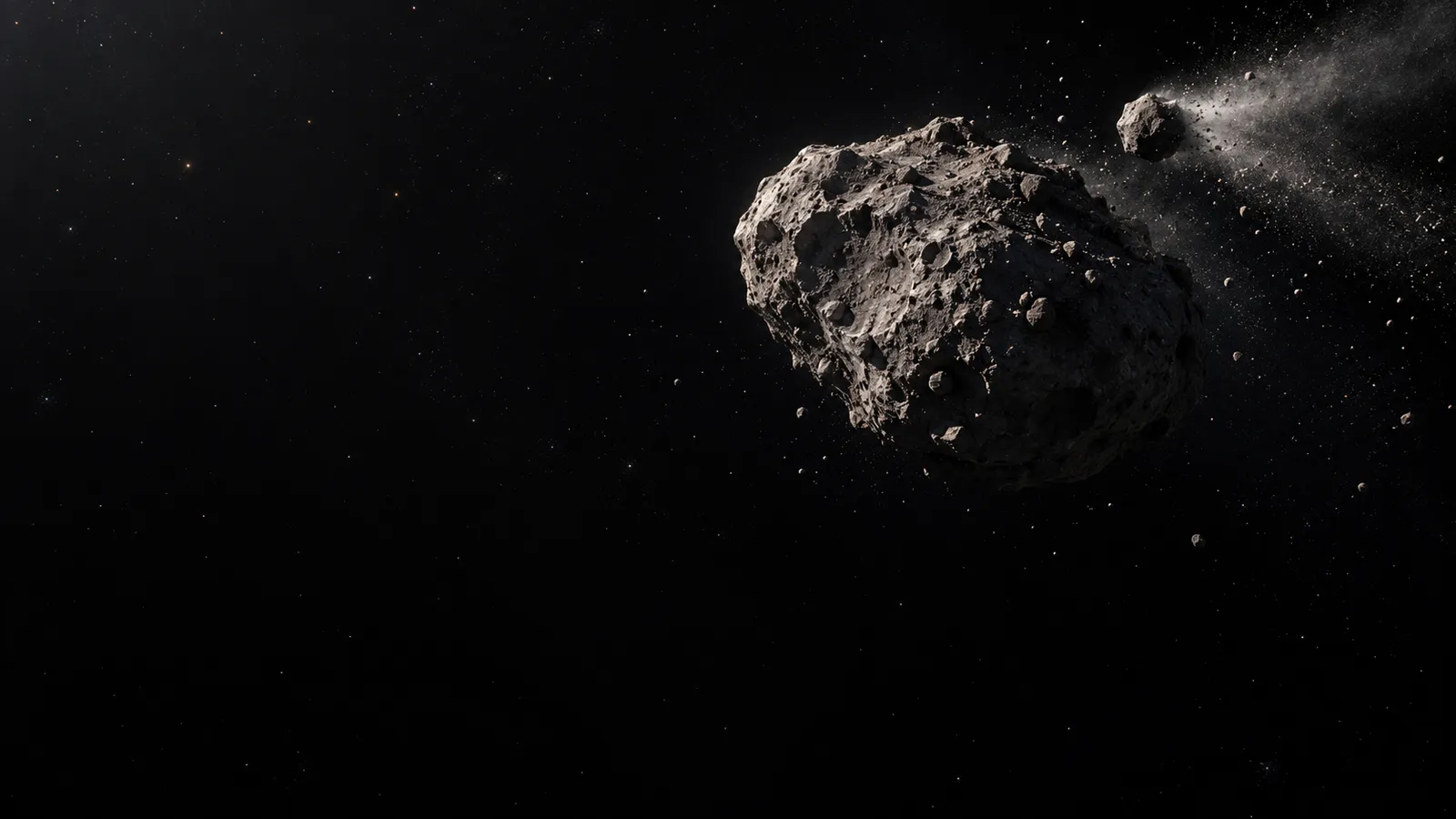
The small asteroid Dimorphos orbits a larger one, Didymos. In September 2022 the American DART spacecraft hit it, and its orbit became 32 minutes shorter. According to NASA, it was the first time people had changed the path of a celestial body. The European probe Hera is closing in on the pair and slowing down, and is due to arrive in November 2026. Once there, it will measure how much Dimorphos weighs and what it is made of.
01Impact
The effect was three times bigger than expected
DART hit Dimorphos at about 22,500 kilometres per hour. The small moon's orbit around Didymos used to take 11 hours 55 minutes and afterwards took 11 hours 23 minutes, which NASA says is 4 per cent shorter. Scientists had expected a shortening of about 10 minutes, but the orbit shrank by more than three times that.
NASA's Tom Statler says material thrown up from the surface contributed substantially, pushing the asteroid in much the way gas from a nozzle drives a rocket. To work out how the same impact would affect another asteroid, you need to know the mass and composition of Dimorphos. Neither is known precisely yet, as impact models have not managed to calculate them and measurements from Earth carry an uncertainty of around 10 per cent.
02Journey
Two years of flight, then braking
Hera launched on 7 October 2024 from Cape Canaveral in Florida, just before Hurricane Milton arrived there. Its flyby of Mars in spring 2025 changed its path and gave it extra speed.
To stay with the asteroids, it has to match their speed. After a short test burn on 2 October, it therefore carried out its first braking manoeuvre on 15 October, according to Gizmodo. ESA planned it as a 93-minute burn of three thrusters, meant to cut Hera's speed relative to the asteroids by several hundred metres per second.

The second burn, about 31 minutes long, was meant to complete most of the slowing down needed. After it, ESA plans three more, smaller manoeuvres before the end of October. Hera took its first image of the asteroid pair from a distance of about 236,500 kilometres, which is just under two thirds of the distance from the Earth to the Moon.
In early November Hera is to come within about 30 kilometres of the asteroids and begin collecting data. ESA gives November 2026 for the actual meeting with the pair.
03The pair
A big asteroid and its small moon
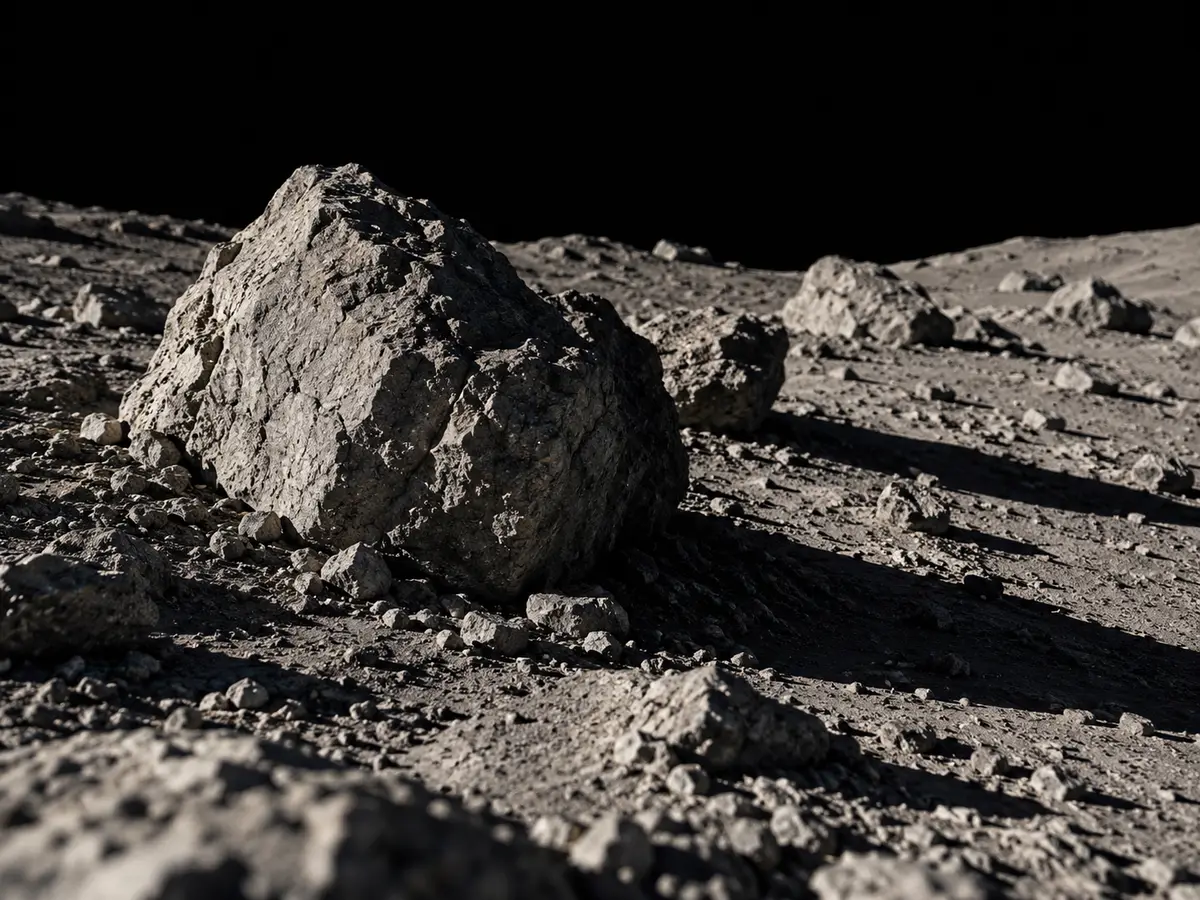
Didymos is about 800 metres across and spins faster than any asteroid a spacecraft has ever visited. Its small moon Dimorphos has a diameter of 151 metres, according to ESA. Pairs like this make up roughly 15 per cent of known asteroids.
04Measurements
What Hera will measure on site
Hera is about the size of a car and carries 12 instruments. It also brings two miniature satellites, the CubeSats Milani and Juventas, each small enough to fit in a briefcase. Its main job is to measure the mass of Dimorphos and its new orbit far more precisely than telescopes on Earth can.

| Satellite | Task |
|---|---|
| Milani | surface spectrum, size and composition of the surrounding dust |
| Juventas | radar reaching as deep as 100 metres, the first ever radar survey of an asteroid's interior |
In November and December Hera will take its measurements from a fairly safe distance of 25 to 30 kilometres. ESA does not rule out that debris from the impact remains around Dimorphos. Unlike the earlier comet probe Rosetta, Hera will, according to ESA, be able to handle much more on its own.
According to Gizmodo, the CubeSats are to be released in January 2027. Juventas is eventually to land on the surface, which will be the first ever landing of a CubeSat on such a small body. Hera will stay with the pair for at least six months, and in a final, experimental phase it is to approach Dimorphos to within a single kilometre.
05Defence
A test for the day Earth is at risk
Neither Didymos nor Dimorphos threatens Earth, according to NASA, and DART was only a test of the technology. If a dangerous asteroid were ever to head for Earth, NASA says it would have to be deflected years in advance. What matters most is how early we discover it.
Bill Nelson, then head of NASA, said after the impact that a dangerous asteroid found in time could be deflected with this technique. According to ESA, Hera is meant to turn a one-off experiment into a method of defending Earth that we will understand and will be able to repeat.
Take a look at the sky above youYou cannot see an asteroid with the naked eye, but the Obloha (Sky) tool shows what is visible above you tonight.Open Obloha